
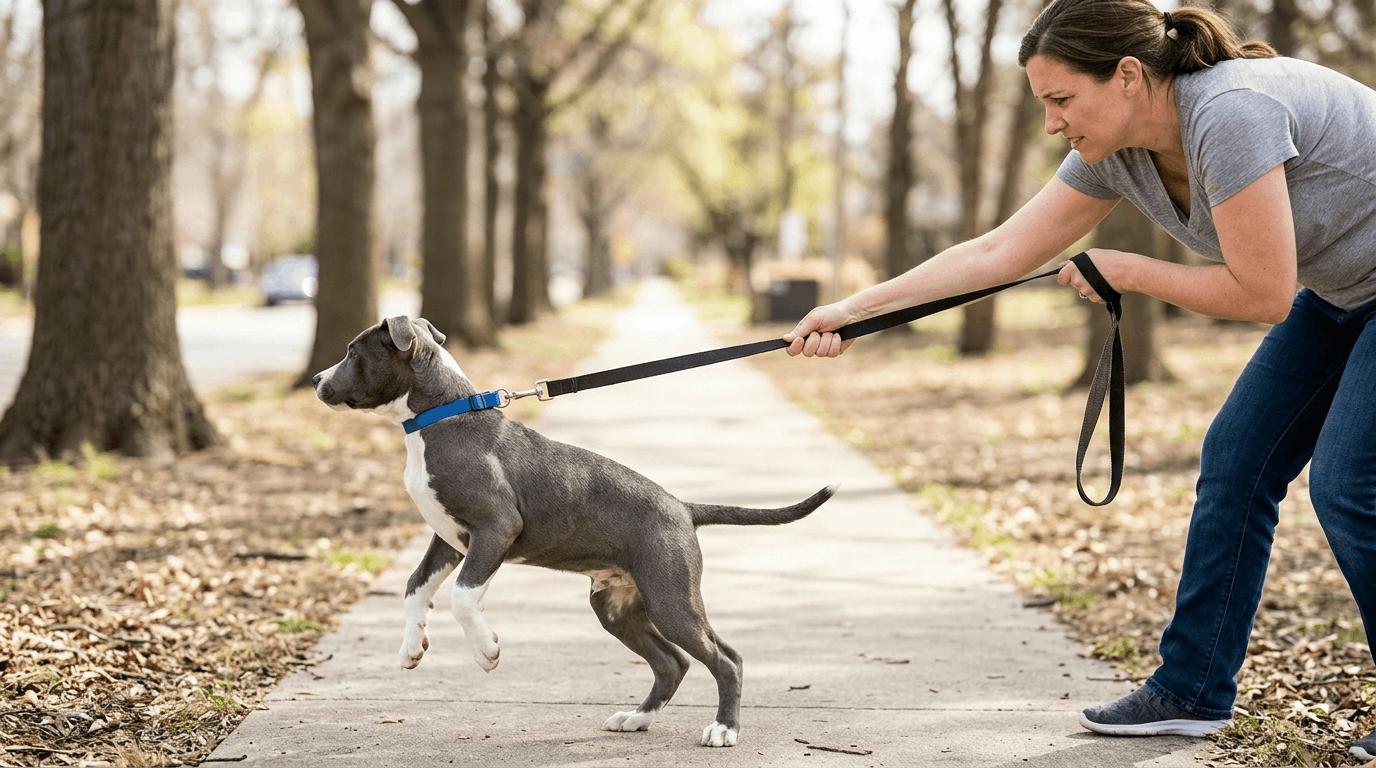
Walking a dog should feel enjoyable, calm, and rewarding for both the owner and the dog. Unfortunately, many walks become frustrating because of pulling, lunging, barking, or constant leash tension. While dogs certainly influence walking behavior, owners often unknowingly contribute to the problem through inconsistent habits and unclear communication. Understanding common leash training mistakes helps owners create healthier routines while improving focus, confidence, and cooperation outdoors.
Many dogs do not naturally understand how to walk calmly beside humans. Walking politely on a leash requires emotional regulation, impulse control, focus, and consistent practice over time.
Owners sometimes expect fast results or rely too heavily on equipment without addressing emotional behavior properly.
Dogs learn through repetition and predictable outcomes. Consequently, inconsistent handling or confusing signals often create frustration for both sides of the leash.
Some leash problems develop because dogs feel overstimulated, anxious, or underprepared for busy environments. Others happen because owners accidentally reward pulling without realizing it.
The good news is that most walking problems improve significantly once owners recognize these common patterns and make calmer, more consistent adjustments during daily walks.
Avoiding leash training mistakes creates better communication while helping dogs feel emotionally balanced and more confident outdoors.
Starting Walks With Too Much Excitement
One of the most common leash training mistakes begins before the walk even starts. Many dogs become emotionally overwhelmed the moment owners grab the leash.
Dogs that bark, spin, jump, or rush toward the door often begin walks in highly excited emotional states. Consequently, pulling and chaotic behavior continue outdoors almost immediately.
Calm preparation matters greatly because emotional momentum carries into the walk itself.
Owners should encourage calmer behavior before attaching the leash. Brief sits, eye contact, or quiet waiting help dogs settle emotionally before exiting the home.
Rushing out the door while the dog feels overstimulated usually reinforces impulsive habits repeatedly.
Calm departures teach dogs that walks begin through patience and emotional control rather than frantic excitement.
Simple pre-walk structure often improves leash behavior surprisingly quickly because dogs start walks feeling calmer and more focused overall.
Allowing Pulling Sometimes but Not Others
Inconsistency creates confusion for dogs faster than almost anything else during leash work.
Many leash training mistakes happen because owners sometimes allow pulling when they feel rushed, distracted, or tired. However, they may correct pulling during other walks.
Dogs struggle to understand inconsistent rules because they learn through repeated patterns and predictable outcomes.
If pulling occasionally helps dogs move forward faster, the behavior becomes strongly reinforced.
Owners should remain consistent about stopping or redirecting pulling whenever leash tension appears.
Forward movement itself becomes a reward during walks. Dogs quickly learn whether pulling helps them reach desired destinations or not.
Clear and predictable handling helps dogs understand expectations much faster over time.
Consistency matters more than perfection. Small repeated habits create long-term leash behavior gradually.
Using Walks Only for Physical Exercise
Many owners focus entirely on burning physical energy during walks while ignoring mental stimulation and emotional balance.
Dogs need more than movement alone to feel calm and fulfilled.
Some leash training mistakes develop because walks become overstimulating cardio sessions rather than balanced emotional experiences.
Fast-paced walks sometimes increase adrenaline and excitement instead of encouraging relaxation.
Mental engagement matters greatly during walks. Sniffing opportunities, focus exercises, training games, and calm exploration all support healthier emotional regulation.
Dogs that receive mental stimulation often display better focus and calmer leash behavior naturally.
Owners should allow appropriate sniffing and environmental exploration instead of constantly rushing dogs forward.
Balanced walks support emotional fulfillment alongside physical exercise, which usually improves leash manners significantly over time.
Relying Too Much on Equipment Alone
Harnesses, collars, and leashes certainly influence comfort and control. However, equipment alone rarely solves behavioral problems completely.
Many leash training mistakes happen because owners expect gear to replace training entirely.
Front-clip harnesses may reduce pulling momentum, yet dogs still need emotional regulation and communication skills.
Similarly, corrective equipment may suppress symptoms temporarily without teaching calm focus or self-control.
Dogs learn best through consistency, emotional balance, and clear reinforcement rather than relying solely on physical management tools.
Owners should choose comfortable supportive equipment while still prioritizing training and relationship-building.
Well-fitted harnesses and standard fixed-length leashes often create the clearest communication without unnecessary discomfort.
Supportive gear helps greatly, yet long-term improvement still depends on calm and consistent guidance.
Repeating Commands Too Often
Owners frequently repeat commands nonstop during walks without realizing the communication problem this creates.
Some leash training mistakes involve saying commands repeatedly while dogs continue ignoring them completely.
For example, owners may repeat “heel,” “slow,” or “no pull” dozens of times during a single walk.
Repeated commands eventually lose meaning because dogs learn they can ignore cues without immediate consequences.
Instead, owners should communicate clearly and calmly once while following through consistently with movement or reinforcement.
Dogs learn more effectively through actions and patterns than constant verbal repetition alone.
Changing direction, stopping movement, or rewarding calm walking often teaches more effectively than nonstop talking during walks.
Clear concise communication creates better focus and understanding over time.
Training in Overwhelming Environments Too Quickly
Many dogs behave well indoors yet struggle completely once distractions appear outdoors.
One of the biggest leash training mistakes involves expecting dogs to succeed immediately in busy environments before building foundational focus gradually.
Dogs experiencing emotional overload cannot learn effectively regardless of how many commands owners give.
Busy sidewalks, crowded parks, loud traffic, or highly stimulating areas often overwhelm dogs emotionally during early training stages.
Owners should begin practicing leash skills in calmer environments before slowly increasing difficulty levels.
Distance from distractions matters greatly too. Dogs often learn better when they feel emotionally safe and relaxed rather than overwhelmed.
Gradual exposure creates confidence and focus much more effectively than forcing dogs through stressful situations repeatedly.
Punishing Emotional Reactions
Some owners respond harshly when dogs pull, bark, or react emotionally during walks. Unfortunately, punishment often increases stress instead of improving behavior long term.
Many leash training mistakes happen because owners focus only on stopping behavior rather than understanding emotional causes behind it.
Dogs that feel anxious, frustrated, or overstimulated usually need emotional guidance rather than harsh corrections.
Fear-based handling may temporarily suppress behavior while increasing emotional tension underneath.
Positive reinforcement and calm redirection generally create healthier long-term results because dogs feel emotionally safe while learning new habits.
Dogs learn best when they trust communication rather than fear mistakes constantly.
Calm emotional handling improves focus and cooperation far more effectively than frustration ever can.
Ignoring Mental Engagement During Walks
Dogs that feel mentally disconnected from their owners usually continue pulling or ignoring leash communication consistently.
One of the most overlooked leash training mistakes involves failing to build engagement outdoors.
Dogs should voluntarily check in, respond to communication, and stay emotionally aware of their owners during walks.
Rewarding eye contact, calm attention, and voluntary focus strengthens communication naturally.
Changing direction unexpectedly also encourages dogs to pay closer attention instead of moving independently toward distractions constantly.
Engagement training helps dogs remain emotionally connected rather than operating entirely on environmental impulses.
Dogs that view owners as rewarding and emotionally relevant generally walk more calmly and cooperatively over time.
Walking Too Long During Early Training
Long frustrating walks often create more rehearsal of pulling than successful learning opportunities.
Some leash training mistakes happen because owners continue walking even after dogs become emotionally overwhelmed or unfocused.
Shorter successful sessions usually create better long-term results than exhausting walks filled with constant tension.
Dogs learn more effectively during calm productive experiences rather than prolonged frustration.
Owners should prioritize quality over duration, especially during early leash training stages.
Several short calm walks often improve behavior faster than one stressful hour-long outing.
Training sessions should end positively whenever possible to reinforce calmer emotional patterns.
Moving Too Fast Through Progression
Owners sometimes expect dogs to master leash skills unrealistically quickly. Unfortunately, rushing progression often creates setbacks and frustration.
Many leash training mistakes involve increasing distractions, duration, or difficulty before dogs feel emotionally ready.
Dogs need time to build emotional resilience and consistent habits gradually.
Progress often appears through small improvements first. Reduced pulling, calmer starts, or better focus already represent important development.
Owners should celebrate gradual success instead of chasing perfection immediately.
Patience creates stronger long-term habits because dogs feel emotionally supported throughout the learning process.
Not Rewarding Calm Behavior Enough
Owners frequently focus only on correcting mistakes while forgetting to reinforce success consistently.
One of the most important leash training mistakes involves ignoring calm behavior entirely.
Dogs need clear feedback about what behaviors owners actually want repeated.
Loose leash moments, calm attention, slower movement, and emotional self-control all deserve reinforcement regularly.
Rewards may include treats, praise, sniffing opportunities, or simply continuing forward movement calmly.
Positive reinforcement helps dogs understand that calm walking creates rewarding outcomes consistently.
Dogs repeat behaviors that produce enjoyable experiences. Consequently, rewarding calm behavior strengthens leash manners naturally over time.
Why Emotional Energy Matters During Walks
Dogs respond strongly to human emotional energy. Owners feeling frustrated, tense, or impatient often influence canine behavior unintentionally.
Some leash training mistakes happen because owners approach walks already expecting conflict or failure.
Calm confident handling helps dogs feel more emotionally secure outdoors.
Slow breathing, relaxed body language, and patient communication all contribute to calmer walking experiences overall.
Dogs frequently mirror emotional tension on the leash. Consequently, calmer owners often see calmer leash behavior naturally over time.
Walking should feel like teamwork rather than constant physical conflict between owner and dog.
Building Better Walking Habits Over Time
Leash training challenges rarely improve through force, frustration, or quick fixes alone. Dogs need emotional balance, consistency, and clear communication to develop calm walking habits successfully.
Understanding common leash training mistakes helps owners create healthier routines while reducing confusion and overstimulation during walks.
Calm preparation, mental engagement, gradual progression, positive reinforcement, and emotional consistency all contribute to better leash manners long term.
Importantly, dogs learn through repeated experiences rather than isolated training moments. Small daily habits shape long-term behavior gradually.
Owners should also remember that every dog learns differently depending on breed tendencies, confidence, age, and previous experiences.
Patience remains essential throughout the process because emotional regulation and focus take time to develop fully.
Ultimately, leash training should strengthen trust and communication rather than creating fear or frustration.
With supportive routines and consistent guidance, most dogs eventually learn how to walk more calmly while enjoying safer and more relaxed experiences outdoors.
FAQ
1. Why does my dog still pull after training?
Inconsistent handling, overstimulation, or emotional excitement often continue reinforcing pulling behavior.
2. Are harnesses better than collars for leash training?
Front-clip harnesses often improve comfort and reduce neck pressure during training.
3. How long should leash training sessions last?
Short calm sessions usually work better than long frustrating walks during early training stages.
4. Can anxiety affect leash behavior?
Yes. Nervous or overstimulated dogs often pull more because emotional stress reduces focus.
5. What is the biggest mistake owners make during walks?
Allowing inconsistent pulling behavior often confuses dogs and slows long-term progress significantly.