
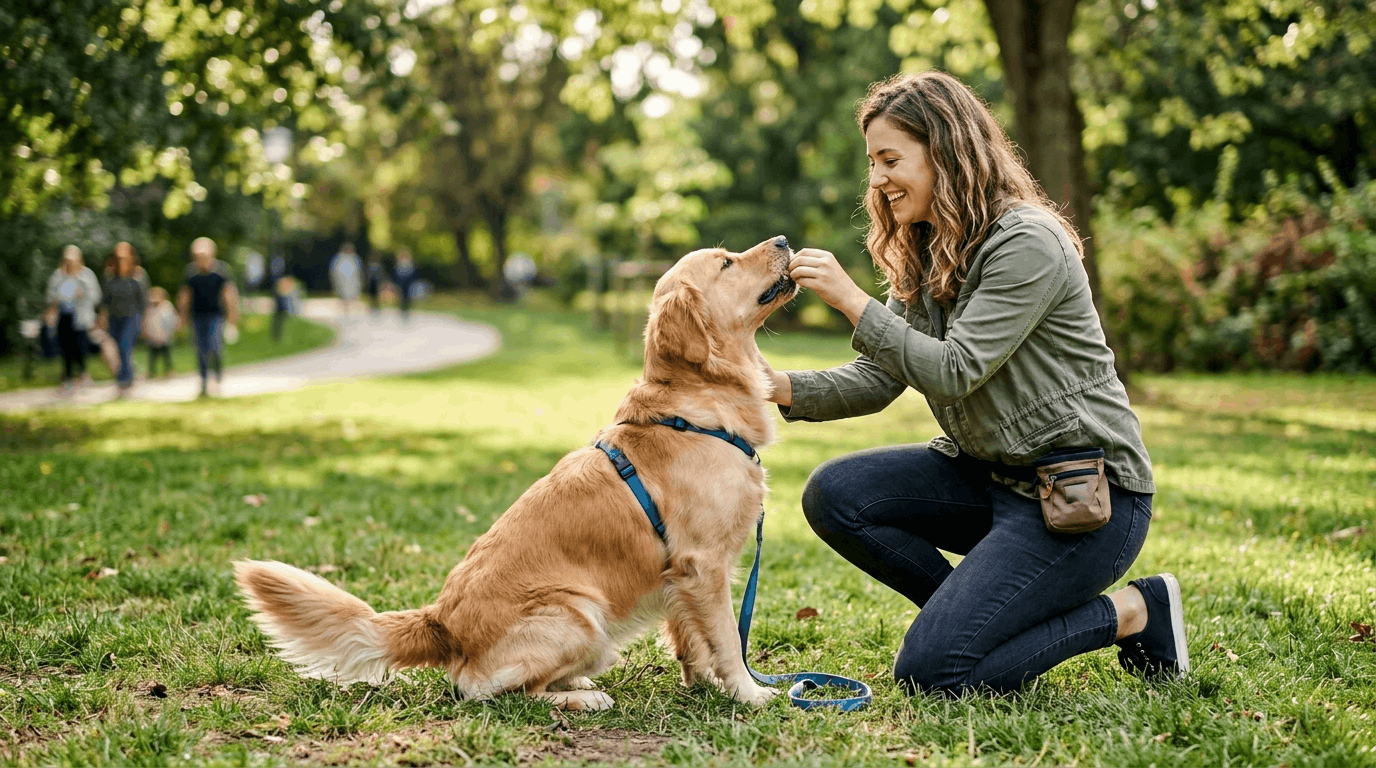
Walking a dog should feel calm, enjoyable, and rewarding for both the owner and the dog. However, many walks quickly become frustrating because dogs pull on the leash, bark excessively, lunge toward distractions, or ignore commands completely. These problems often create stress for owners while increasing emotional tension for dogs as well. Fortunately, positive reinforcement training offers a safer, calmer, and more effective way to improve walking behavior without relying on fear or punishment.
Dogs learn best when they feel emotionally secure and motivated to succeed.
Instead of focusing on correction alone, reward-based methods teach dogs which behaviors create positive outcomes consistently.
Calm walking, loose leash behavior, attention, and emotional control all become easier when dogs associate good choices with rewards and encouragement.
Importantly, positive training also strengthens trust between dogs and owners.
Dogs trained through supportive methods often become more confident, emotionally balanced, and responsive over time.
Better walks therefore involve more than obedience alone. Emotional communication, consistency, and positive experiences play major roles in long-term success.
Why Dogs Pull During Walks
Many owners assume dogs pull simply because they are stubborn or disobedient. However, pulling often happens because dogs become excited, overstimulated, distracted, or emotionally overwhelmed outdoors.
Positive reinforcement training works effectively because it addresses motivation and emotional learning rather than relying on force.
Dogs naturally move toward things they find rewarding, including smells, movement, people, or other animals.
Unfortunately, pulling sometimes accidentally succeeds because dogs eventually reach the exciting object anyway.
Over time, this teaches dogs that tension on the leash helps them move forward faster.
Understanding the emotional reason behind pulling helps owners respond more effectively without frustration.
The Importance of Emotional Calmness
Calm emotional states strongly influence learning and leash behavior.
Positive reinforcement training helps dogs remain emotionally balanced because rewards encourage focus and relaxation instead of fear or stress.
Dogs struggling emotionally often find it difficult to listen or process information calmly outdoors.
Fear, overstimulation, excitement, and frustration all reduce focus significantly.
Owners therefore benefit from helping dogs remain emotionally calm before expecting perfect walking behavior immediately.
Calm minds learn more effectively than stressed or over-aroused minds.
Importantly, emotional regulation improves gradually through consistent practice and supportive guidance.
Rewarding the Behavior You Want
Dogs repeat behaviors that consistently create rewarding outcomes.
Positive reinforcement training teaches dogs that calm walking, eye contact, and loose leash movement produce rewards and enjoyable experiences.
Rewards may include treats, praise, toys, sniffing opportunities, or affection depending on the dog’s preferences.
Importantly, timing matters greatly during training.
Owners should reward desired behavior immediately so dogs clearly understand which action created the positive result.
Small repeated successes gradually strengthen better walking habits over time.
Consistent reinforcement creates clearer communication while helping dogs stay motivated throughout training.
Starting Training in Low-Distraction Areas
Many owners expect dogs to perform perfectly in busy environments too quickly.
Positive reinforcement training becomes much easier when dogs first practice in calm familiar spaces with fewer distractions.
Quiet streets, backyards, driveways, or indoor areas help dogs focus more successfully during early training sessions.
Dogs overwhelmed by busy environments often struggle because excitement and stimulation compete heavily for attention.
Starting small allows dogs to build confidence gradually before facing more difficult situations outdoors.
Importantly, gradual progress creates stronger long-term results than rushing into overwhelming environments immediately.
Teaching Loose Leash Walking Slowly
Loose leash walking develops through repetition, patience, and emotional consistency.
Positive reinforcement training encourages dogs to stay closer because calm leash behavior creates rewards repeatedly.
Owners should reward dogs frequently whenever the leash remains loose during walks.
If dogs begin pulling, calmly stopping movement often works better than harsh correction.
Forward movement itself becomes part of the reward system.
Dogs gradually learn that pulling prevents progress while calm walking allows enjoyable movement to continue.
Importantly, patience remains essential because leash skills improve gradually through many repeated experiences.
Using Attention as a Foundation
Attention and engagement create the foundation for successful walking behavior.
Positive reinforcement training helps dogs learn that checking in with owners feels rewarding and worthwhile.
Simple exercises such as rewarding eye contact during walks build stronger focus naturally.
Dogs that voluntarily pay attention often respond more reliably during distractions and stressful situations.
Owners should therefore reward calm engagement frequently instead of only reacting when problems appear.
Strong communication improves emotional security while helping dogs feel more connected during walks.
Avoiding Harsh Corrections
Many traditional training methods rely heavily on leash jerks, yelling, or physical correction.
Positive reinforcement training avoids these approaches because punishment often increases stress, fear, or frustration.
Dogs trained through fear sometimes become more reactive or emotionally anxious outdoors.
Additionally, harsh correction may damage trust and reduce willingness to engage positively during walks.
Calm guidance and redirection usually create healthier emotional outcomes while improving long-term behavior more effectively.
Dogs that feel emotionally safe generally learn faster and remain more confident throughout training.
Why Consistency Matters
Dogs learn through repeated predictable experiences over time.
Positive reinforcement training works best when owners remain consistent with rewards, expectations, and communication daily.
Mixed messages often confuse dogs because behavioral outcomes become unpredictable.
For example, allowing pulling sometimes while discouraging it later slows learning considerably.
Consistency helps dogs understand which behaviors reliably create positive results.
Importantly, every family member should follow similar walking rules and reinforcement patterns whenever possible.
Clear predictable communication creates faster progress and stronger behavioral habits long term.
Mental Stimulation Improves Walks
Many dogs struggle during walks because they feel mentally under-stimulated or emotionally frustrated throughout the day.
Positive reinforcement training becomes more effective when dogs receive mental enrichment alongside physical exercise.
Puzzle toys, scent games, obedience practice, and problem-solving activities help dogs remain calmer and more focused overall.
Dogs with fulfilled mental needs often display better emotional regulation outdoors.
Importantly, sniffing during walks also provides natural mental enrichment that reduces stress and encourages calmer behavior.
Owners who constantly rush walks may unintentionally increase frustration and overstimulation.
Balanced enrichment supports healthier emotional processing naturally.
Helping Reactive Dogs Stay Calm
Some dogs bark, lunge, or react strongly toward people, dogs, bicycles, or noises during walks.
Positive reinforcement training helps reactive dogs develop calmer emotional responses gradually through controlled positive experiences.
Distance often plays a major role during reactive dog training.
Dogs usually learn more effectively when far enough away from triggers to remain emotionally calm.
Owners should reward calm observation before reactions escalate fully.
Gradual exposure paired with rewards helps dogs associate triggers with positive outcomes rather than fear or frustration.
Importantly, reactive behavior often improves slowly through steady emotional confidence-building.
Exercise Supports Emotional Balance
Physical activity influences emotional regulation and behavior significantly.
Positive reinforcement training often becomes easier once dogs receive balanced daily exercise suited to their age, breed, and energy level.
Dogs carrying excess physical energy may struggle remaining calm or focused during walks.
However, balanced exercise matters more than exhausting dogs completely through nonstop activity.
Structured walks, calm play, scent exploration, and training games all contribute positively to emotional balance.
Importantly, overstimulation sometimes increases emotional arousal rather than improving calmness.
Balanced routines create healthier emotional outcomes overall.
Building Confidence Through Success
Confident dogs often walk more calmly because they feel emotionally secure and capable outdoors.
Positive reinforcement training builds confidence by allowing dogs to succeed repeatedly in manageable situations.
Owners should celebrate small improvements rather than expecting immediate perfection.
Calmer leash behavior, improved focus, shorter pulling episodes, or quicker recovery from distractions all represent meaningful progress.
Dogs develop emotional resilience gradually through positive experiences and supportive communication.
Importantly, confidence-building helps reduce frustration for both dogs and owners during training.
Why Patience Creates Better Results
Many owners become discouraged because walking behavior rarely improves overnight.
Positive reinforcement training requires patience because emotional habits and behavioral patterns develop gradually through repetition.
Dogs learn at different speeds depending on temperament, history, environment, and emotional sensitivity.
Frustration often slows progress because emotional tension affects learning negatively.
Owners should therefore focus on consistency and small daily improvements instead of demanding perfection immediately.
Steady supportive practice almost always produces stronger long-term results than forceful correction or unrealistic expectations.
Creating Positive Walking Routines
Predictable walking routines help dogs feel emotionally secure and more focused outdoors.
Positive reinforcement training works especially well when walks follow calm structured patterns consistently.
Owners should begin walks calmly rather than encouraging frantic excitement before leaving the home.
Practicing simple focus exercises before opening doors often helps dogs settle emotionally.
Structured routines reduce overstimulation while creating clearer expectations for behavior outdoors.
Dogs generally respond more calmly when they understand predictable patterns and emotional boundaries during walks.
Strengthening the Bond Through Training
Walking together provides valuable opportunities to strengthen trust and communication.
Positive reinforcement training improves relationships because dogs begin associating owners with safety, guidance, and rewarding experiences.
Dogs trained through encouragement often become more eager to engage and cooperate naturally.
Importantly, trust creates emotional stability that strongly influences behavior outdoors.
Calm connected dogs usually recover from stress more quickly because they feel supported during challenging situations.
Training therefore strengthens more than obedience alone. It also builds emotional connection and mutual confidence.
Long-Term Success Comes From Balance
Successful walking behavior develops through emotional balance, communication, patience, and consistency working together.
Positive reinforcement training creates healthier emotional learning because dogs feel motivated rather than fearful during the process.
Owners who focus on encouragement, structure, and emotional support usually see stronger long-term progress over time.
Importantly, calm enjoyable walks should remain the primary goal rather than perfect robotic obedience.
Dogs that feel emotionally secure, mentally fulfilled, and clearly guided often display calmer leash behavior naturally.
Every small success contributes to long-term improvement.
With steady practice and supportive training, dogs gradually learn how to walk calmly, focus better, and enjoy outdoor experiences more confidently.
Ultimately, better walks come from trust, emotional stability, and positive communication rather than punishment or force.
FAQ
1. Why does reward-based training improve walks?
Rewards motivate dogs to repeat calm behaviors while reducing fear and frustration during learning.
2. What treats work best during leash training?
Soft high-value treats often help maintain focus during distracting outdoor environments.
3. Should I stop walking when my dog pulls?
Yes. Calm stopping helps teach dogs that pulling prevents forward movement naturally.
4. Can older dogs still learn loose leash walking?
Yes. Consistent practice and positive reinforcement help dogs learn at any age.
5. How long does leash training usually take?
Progress depends on consistency, emotional balance, and each dog’s individual personality and history.