
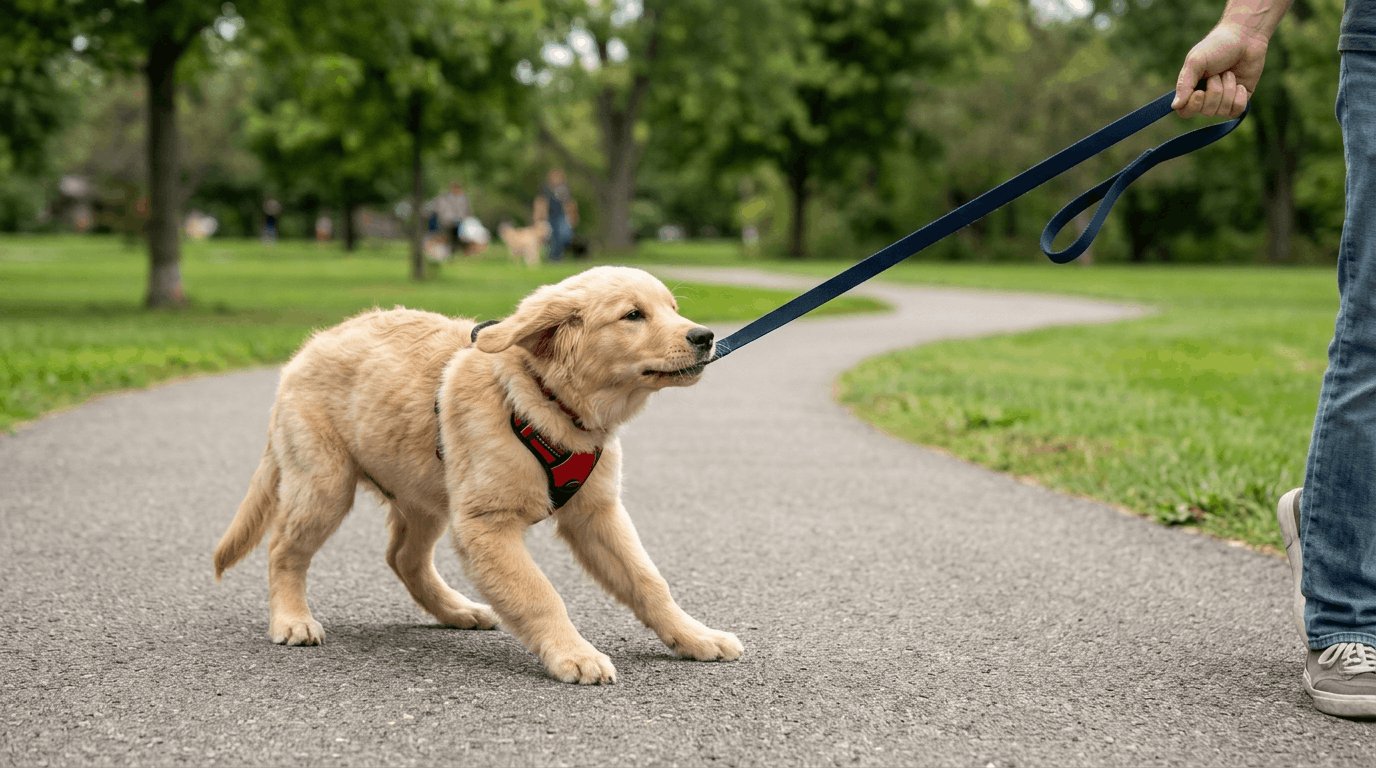
Puppy pulling on walks is one of the most common frustrations new dog owners face, especially when excitement quickly turns into a constant tug-of-war. While it may seem like simple misbehavior, the reality is that your puppy is reacting to the world with curiosity, energy, and very little guidance. Fortunately, with the right approach, you can transform those chaotic walks into calm, controlled experiences that feel enjoyable again.
At the start, many owners unknowingly reinforce pulling without realizing it. When your puppy pulls and you keep walking forward, they learn that pulling works. As a result, puppy pulling on walks becomes a habit that strengthens over time. However, once you understand why it happens and how to respond consistently, you can shift that behavior surprisingly fast.
Understanding Why Puppies Pull on Walks
To fix the issue quickly, you need to understand what drives it. Puppies explore the world through movement, and every sight, smell, and sound pulls their attention forward. Therefore, pulling is not defiance; it is simply enthusiasm without structure. This is why puppy pulling on walks is so common in young dogs who have not yet learned how to walk calmly beside you.
In addition, your puppy’s natural pace is often faster than yours. While you move with intention, your puppy reacts instantly to distractions. This mismatch creates tension on the leash, which quickly becomes the default way they move. Over time, if nothing changes, pulling feels normal to them.
Another key factor is inconsistency. If sometimes your puppy is allowed to pull and other times corrected, confusion builds. Because dogs learn through repetition, unclear rules slow down progress. That is why clear expectations are essential when addressing puppy pulling on walks.
Building the Right Foundation From Day One
Before correcting pulling, it is important to create a foundation of calm behavior. Puppies need to learn that walking is a shared activity, not a free-for-all adventure. This is where structured training makes a noticeable difference.
Start in a low-distraction environment such as your home or backyard. Practice walking with a loose leash and reward your puppy for staying close. When your puppy chooses to walk beside you, reinforce that behavior immediately. These early steps make puppy pulling on walks easier to prevent rather than fix later.
Timing plays a critical role here. Reward calm behavior before your puppy begins to pull. This teaches them what works instead of only reacting after mistakes happen. Over time, your puppy begins to associate walking calmly with positive outcomes.
Consistency is just as important. Each time you practice, follow the same rules. When your puppy understands what is expected, they feel more confident and respond more reliably. As a result, puppy pulling on walks starts to decrease naturally.
Using Stop-and-Go to Reset Behavior
One of the fastest ways to address pulling is the stop-and-go method. This technique is simple, yet highly effective when used consistently. Whenever your puppy pulls, you stop walking immediately. As soon as the leash becomes loose again, you continue forward.
Although it may feel slow at first, this method teaches a clear lesson. Pulling stops progress, while a loose leash allows movement. Because puppies are motivated to explore, they quickly learn that pulling does not get them what they want. This is why stop-and-go training works so well for puppy pulling on walks.
At first, you may stop frequently, even every few steps. However, patience during this phase pays off. As your puppy begins to understand the pattern, the stops become less frequent. Eventually, your puppy learns to stay close without constant correction.
It is important to stay calm during this process. Avoid jerking the leash or expressing frustration. Instead, let the consequence speak for itself. This calm approach helps your puppy learn without creating stress or confusion.
Teaching Your Puppy to Check In With You
A powerful way to reduce pulling is to build engagement. When your puppy focuses on you, distractions lose their power. This is why attention training plays a key role in fixing puppy pulling on walks.
Start by rewarding your puppy whenever they look at you during a walk. Even brief eye contact deserves recognition. Over time, your puppy will check in more often, especially when unsure. This creates a natural connection that replaces constant pulling.
You can also use a consistent cue to encourage attention. Pair this cue with rewards so your puppy associates it with something positive. As your puppy responds more reliably, you can use the cue to redirect them away from distractions.
Engagement builds a habit of awareness. Instead of pulling ahead, your puppy learns to stay connected. This shift is one of the most effective ways to reduce puppy pulling on walks quickly.
Managing Energy Before the Walk Begins
Many puppies pull simply because they have too much energy. If your puppy starts a walk in an overexcited state, calm behavior becomes much harder to achieve. Therefore, managing energy levels before heading out can make a significant difference.
Allow your puppy to release some energy through play before the walk. Even a short session can help reduce that initial burst of excitement. As a result, your puppy begins the walk in a more balanced state.
It also helps to wait for calm behavior before opening the door. If your puppy is jumping or pulling toward the exit, pause until they settle. This teaches patience and sets the tone for the entire walk.
By addressing energy levels early, you create a smoother experience overall. Puppy pulling on walks often decreases simply because your puppy is better prepared to focus.
Choosing the Right Equipment for Success
The equipment you use can support your training efforts. While no tool replaces proper training, the right setup can make learning easier. A well-fitted harness or standard collar provides better control without causing discomfort.
Avoid relying on harsh tools that promise instant results. While they may stop pulling temporarily, they do not teach your puppy how to walk calmly. Instead, they can create fear or resistance, which slows progress.
Focus on tools that support positive training. A comfortable harness combined with consistent guidance helps your puppy learn in a safe and effective way. When used correctly, these tools make puppy pulling on walks easier to manage.
Remember, the goal is not just control but understanding. When your puppy learns the right behavior, the need for control naturally decreases.
Staying Consistent in Real-World Situations
Training does not end in quiet environments. Real progress happens when your puppy can walk calmly in different settings. However, distractions make this step more challenging.
Start by introducing mild distractions and gradually increase difficulty. This gradual approach helps your puppy stay successful while learning. If your puppy becomes overwhelmed, step back to an easier situation.
Consistency remains key during this phase. Apply the same rules regardless of the environment. Whether you are in your neighborhood or a busy park, your expectations should stay the same.
By practicing regularly, your puppy learns that calm walking applies everywhere. Over time, puppy pulling on walks becomes less frequent, even in stimulating environments.
Avoiding Common Mistakes That Slow Progress
Many owners unintentionally slow their progress by making small mistakes. One common issue is allowing pulling sometimes while correcting it at other times. This inconsistency creates confusion and delays learning.
Another mistake is expecting fast results without repetition. While you can see improvements quickly, lasting change requires consistent practice. Rushing the process often leads to setbacks.
It is also important to avoid reacting emotionally. Frustration can transfer to your puppy, increasing tension during walks. Staying calm helps your puppy feel secure and focused.
By recognizing and correcting these mistakes, you can speed up your progress. Puppy pulling on walks becomes much easier to manage when your approach stays clear and consistent.
Conclusion: Turning Pulling Into Calm, Controlled Walks
Puppy pulling on walks may feel overwhelming at first, yet it is one of the easiest behaviors to improve with the right strategy. By focusing on consistency, timing, and clear communication, you can guide your puppy toward calm and controlled walking habits.
As you apply these techniques, you will notice gradual changes that build over time. Walks become smoother, your puppy becomes more attentive, and the bond between you strengthens. What once felt like a struggle can turn into one of the most enjoyable parts of your day.
With patience and practice, puppy pulling on walks no longer defines your experience. Instead, it becomes a challenge you have successfully overcome, leading to more relaxed and confident walks ahead.
FAQ
1. Why does my puppy pull so much during walks?
Puppies pull because they are excited and curious about their environment, not because they are being stubborn.
2. How quickly can I stop leash pulling behavior?
You can see improvements within days, but consistent training over several weeks creates lasting results.
3. Should I use a harness or collar for training?
A well-fitted harness often provides better control and comfort while teaching proper walking habits.
4. What should I do when my puppy starts pulling suddenly?
Stop walking immediately and wait for the leash to loosen before continuing forward.
5. Can training work in busy environments?
Yes, but start in low-distraction areas first and gradually build your puppy’s ability to handle more stimulation.