
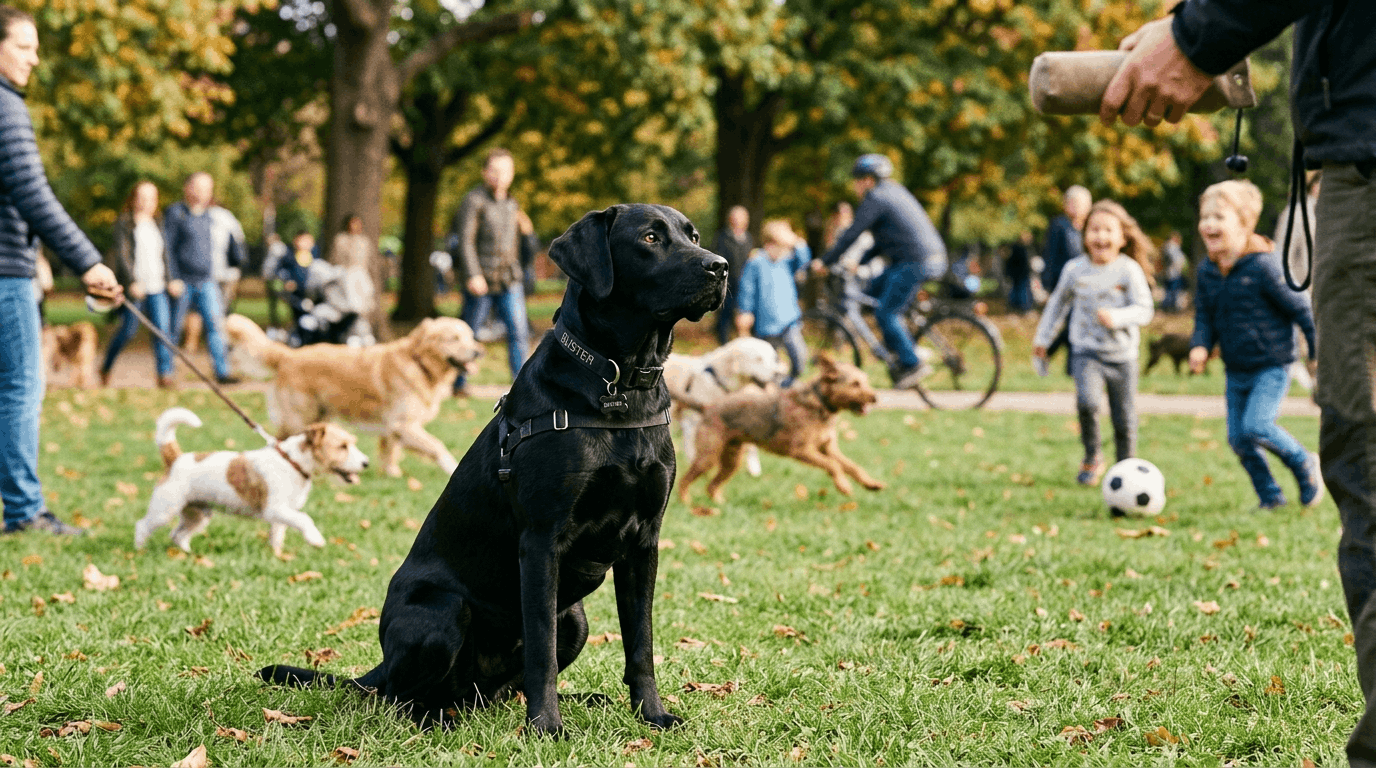
Training your dog to stay attentive in a quiet room is one thing, but real-life situations are rarely that simple. Learning dog focus with distractions is essential if you want your dog to respond reliably in parks, busy streets, or social settings. Dogs are naturally curious, and new sights, sounds, and smells can easily pull their attention away. Because of this, building strong focus skills requires patience, structure, and the right techniques.
When you work on dog focus with distractions, you are not just improving obedience. You are also helping your dog develop self-control and confidence. Over time, this training creates a calmer, more responsive companion that can handle everyday challenges without becoming overwhelmed. While it may seem difficult at first, consistent practice leads to noticeable improvements that benefit both you and your dog.
Why Dogs Lose Focus In Stimulating Environments
Understanding why dogs become distracted is the first step toward improving attention. Dogs rely heavily on their senses, especially smell and hearing, which means they constantly process information from their surroundings. Because of this, dog focus with distractions becomes challenging when the environment offers more stimulation than your commands.
For example, a passing dog, a loud noise, or even a new scent can quickly capture your dog’s attention. These distractions often feel more rewarding than listening to commands. As a result, your dog may ignore cues that it would normally follow at home.
In addition, lack of exposure plays a role. Dogs that are not gradually introduced to different environments may struggle to adapt. Therefore, dog focus with distractions improves when you build experience slowly and consistently. By understanding these factors, you can approach training with greater clarity and effectiveness.
Building A Strong Foundation Before Adding Distractions
Before tackling complex environments, your dog needs a solid training foundation. Basic commands such as “sit,” “stay,” and “look” should be reliable in a quiet setting. These commands form the basis of dog focus with distractions and help your dog understand what is expected.
Training should begin in a low-distraction environment where your dog can succeed. This allows you to reinforce correct behavior without competing stimuli. Once your dog responds consistently, you can gradually introduce mild distractions.
Consistency is key during this stage. Repeating exercises and rewarding correct responses builds confidence and clarity. Over time, this foundation makes it easier to transition into more challenging situations. By focusing on basics first, you set your dog up for success in dog focus with distractions training.
Using High-Value Rewards To Capture Attention
Motivation plays a crucial role in maintaining focus, especially in distracting environments. High-value rewards can help your dog stay engaged and responsive. When working on dog focus with distractions, using treats or rewards that your dog truly enjoys makes a significant difference.
These rewards should be reserved specifically for training sessions involving distractions. This increases their value and effectiveness. As a result, your dog becomes more willing to focus on you rather than the surrounding environment.
Timing is also important. Rewarding your dog immediately after a correct response helps reinforce the behavior. Over time, your dog learns that staying focused leads to positive outcomes. This approach strengthens dog focus with distractions and encourages consistent performance.
Gradually Increasing Distraction Levels
Training should progress in small, manageable steps. Jumping directly into highly distracting environments can overwhelm your dog and lead to frustration. Instead, dog focus with distractions improves when distractions are introduced gradually.
Start with mild distractions, such as background noise or movement at a distance. Once your dog remains focused, increase the level of difficulty. This might include busier areas or more active environments.
Each step should be mastered before moving to the next. If your dog struggles, it is important to reduce the level of distraction and rebuild confidence. By progressing slowly, you ensure that dog focus with distractions develops in a controlled and effective way.
Teaching The “Look At Me” Command
One of the most effective tools for maintaining attention is the “look at me” command. This simple cue teaches your dog to make eye contact and focus on you. Because of this, it becomes a key component of dog focus with distractions training.
Begin by practicing this command in a quiet setting. Hold a treat near your face and reward your dog for making eye contact. Once the behavior becomes consistent, add the verbal cue.
As your dog improves, practice the command in more distracting environments. This helps reinforce the habit of checking in with you. Over time, your dog will naturally look to you for guidance, even when distractions are present.
Image Placement And Optimization
Image 1: Dog focusing on owner in a park
Alt text: dog focus with distractions training in outdoor environment
Image 2: Dog making eye contact during training
Alt text: dog focus with distractions using look at me command
Image 3: Dog ignoring distractions while walking
Alt text: dog focus with distractions leash training example
Managing The Environment For Success
While training is important, managing the environment also plays a role. Dog focus with distractions becomes easier when you control exposure and avoid overwhelming situations. For example, choosing quieter times for walks can help your dog succeed.
In addition, maintaining a safe distance from distractions allows your dog to stay focused. As your dog improves, you can gradually reduce this distance. This approach helps build confidence without causing stress.
Using tools such as leashes or harnesses also provides better control during training. By managing the environment effectively, you create opportunities for success and reinforce positive behavior.
Practicing Consistency In Daily Life
Consistency is essential for long-term success. Dog focus with distractions should not be limited to formal training sessions. Instead, it should be practiced in everyday situations.
Incorporate focus exercises during walks, playtime, and routine activities. For example, asking your dog to sit before crossing the street reinforces attention. These small moments add up and strengthen overall behavior.
In addition, all family members should follow the same training approach. Consistent commands and expectations prevent confusion. Over time, this consistency helps your dog maintain focus in a variety of environments.
Handling Setbacks And Staying Patient
Training is a gradual process, and setbacks are normal. When working on dog focus with distractions, it is important to remain patient and adjust your approach as needed. If your dog becomes overwhelmed, take a step back and simplify the task.
Avoid punishment, as it can create anxiety and reduce trust. Instead, focus on positive reinforcement and encouragement. By maintaining a calm and supportive attitude, you help your dog feel more secure.
Progress may vary depending on your dog’s personality and experience. However, with consistent effort, improvements will become noticeable. Staying patient ensures that dog focus with distractions develops in a healthy and sustainable way.
Conclusion
Training your dog to stay focused in distracting environments is one of the most valuable skills you can develop. Dog focus with distractions not only improves obedience but also builds confidence and self-control. By understanding your dog’s behavior, using effective techniques, and maintaining consistency, you create a strong foundation for success.
Although the process requires time and effort, the results are well worth it. A focused dog is easier to manage, more responsive, and better equipped to handle real-world situations. Ultimately, dog focus with distractions transforms everyday experiences into positive and enjoyable interactions for both you and your pet.
FAQ
- How long does it take to train a dog to stay focused?
Training time varies, but consistent practice can show results within a few weeks. - What is the best reward for focus training?
High-value treats or favorite toys work best to keep your dog motivated. - Can all dogs learn to ignore distractions?
Yes, with proper training and patience, most dogs can improve their focus significantly. - Should I train indoors or outdoors first?
Start indoors, then gradually move to outdoor environments as your dog improves. - What should I do if my dog ignores commands?
Reduce distractions, reinforce basic training, and reward successful responses consistently.