
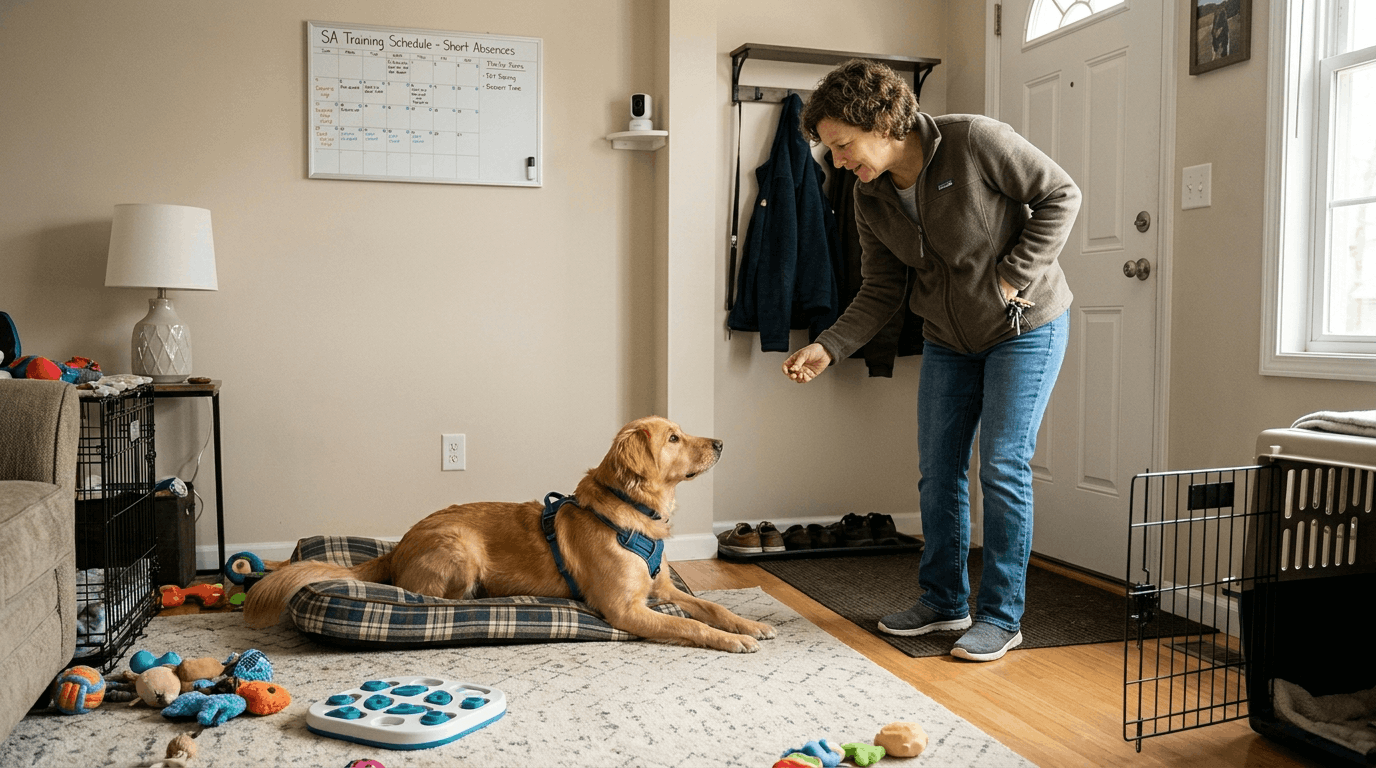
Separation anxiety can feel overwhelming for both dogs and their owners, especially when everyday routines turn into stressful experiences. Fortunately, the right training programs for separation anxiety can gradually reshape your dog’s response to being alone, helping them feel safe instead of panicked. While there is no instant fix, consistent training paired with patience creates real, lasting change.
Many pet owners first notice the problem through behaviors like excessive barking, destructive chewing, or attempts to escape. These signs are not acts of disobedience but rather symptoms of distress. Because of this, effective solutions must focus on emotional regulation instead of punishment. Training programs for separation anxiety work best when they address the root cause, helping dogs build independence in a controlled and supportive way.
Understanding How Separation Anxiety Develops
Before diving into structured approaches, it helps to understand why this condition develops in the first place. Some dogs are naturally more sensitive, while others may have experienced sudden changes such as moving homes, losing a companion, or shifts in daily routines. In many cases, a lack of gradual independence training early in life also contributes to the issue.
Because of this, training programs for separation anxiety must be tailored to each dog’s personality and history. For example, a rescue dog may need a slower, more trust-focused plan, while a young puppy might respond quickly to routine-based strategies. Although the causes vary, the goal remains the same: helping your dog feel secure even when you are not present.
Why Structured Training Matters
Random attempts to leave your dog alone for longer periods often make anxiety worse. Instead, structured training programs for separation anxiety provide a clear progression that builds confidence step by step. This approach prevents overwhelming your dog and allows them to adjust at a manageable pace.
Additionally, structured plans create predictability. Dogs thrive on routine, and knowing what to expect reduces uncertainty. Over time, this sense of stability helps shift their emotional response from fear to calm acceptance.
Gradual Desensitization Programs
One of the most effective training programs for separation anxiety is gradual desensitization. This method involves exposing your dog to short periods of separation while ensuring they remain calm. Instead of leaving for hours immediately, you start with seconds or minutes and slowly increase the duration.
At first, you might simply step outside the door and return before your dog shows signs of distress. Then, as your dog becomes more comfortable, you extend the time away. This process teaches them that your absence is temporary and not something to fear.
Consistency plays a key role here. Even though progress may feel slow, gradual desensitization is one of the most reliable training programs for separation anxiety because it builds genuine emotional resilience rather than masking symptoms.
Counterconditioning Techniques
Another powerful approach involves changing how your dog feels about being alone. Counterconditioning pairs your departure with something positive, such as a high-value treat or a special toy that only appears when you leave.
Over time, your dog begins to associate your absence with rewards instead of stress. While this may sound simple, it is one of the most effective training programs for separation anxiety when combined with gradual exposure.
However, timing matters. The reward must be introduced before anxiety begins, otherwise it loses its impact. When done correctly, this method transforms a negative trigger into a positive experience.
Independence Training At Home
In many households, dogs become overly dependent because they are rarely alone, even when their owners are home. As a result, independence training becomes an essential part of any long-term solution.
This approach involves encouraging your dog to spend time in a separate room or relaxing independently while you are still in the house. Although it may seem minor, this step builds the foundation for more advanced training programs for separation anxiety.
Start with short intervals and gradually increase the distance and duration. By doing this, your dog learns that being alone does not always mean being abandoned. Instead, it becomes a normal part of daily life.
Crate Training As A Safe Space
For some dogs, a crate can provide a sense of security when used correctly. It should never be seen as confinement or punishment. Instead, it becomes a personal space where your dog feels safe and relaxed.
When incorporated into training programs for separation anxiety, crate training can help reduce panic by offering a familiar and controlled environment. However, this method only works if your dog is already comfortable with the crate. For anxious dogs, forcing crate use too quickly can increase stress.
Therefore, the focus should always be on positive associations, gradually building comfort and trust within the space.
Technology-Assisted Training Programs
Modern tools now play a significant role in managing separation anxiety. Cameras, treat dispensers, and interactive devices allow you to monitor your dog remotely and even reward calm behavior in real time.
These tools enhance training programs for separation anxiety by providing immediate feedback. For instance, you can observe when your dog starts to show signs of stress and adjust your approach accordingly.
Additionally, hearing your voice through a device can sometimes reassure your dog. However, this should be used carefully, as over-reliance on remote interaction may delay true independence if not balanced properly.
Professional Behavior Programs
In more severe cases, working with a professional trainer or behaviorist may be necessary. These experts can design customized training programs for separation anxiety based on your dog’s specific triggers and responses.
Professional guidance ensures that training progresses safely and effectively. Moreover, it helps avoid common mistakes, such as increasing separation time too quickly or reinforcing anxious behaviors unintentionally.
Although hiring a professional requires investment, it often accelerates progress and provides clarity during challenging situations.
Common Mistakes To Avoid
Even with the best intentions, certain habits can slow progress or worsen anxiety. For example, making a big fuss when leaving or returning home reinforces emotional highs and lows. Instead, calm and neutral behavior helps normalize the experience.
Another common mistake is punishing anxious behaviors. Since these actions stem from fear, punishment only increases stress and confusion. Instead, successful training programs for separation anxiety focus on prevention and emotional support.
Rushing the process is also problematic. Although it is tempting to expect quick results, long-term success depends on gradual progress. Skipping steps often leads to setbacks that require starting over.
Building A Consistent Routine
Routine is one of the most powerful tools in managing separation anxiety. Dogs feel more secure when their daily schedule remains predictable. Feeding times, walks, play sessions, and rest periods should follow a consistent pattern.
By combining routine with training programs for separation anxiety, you create a stable environment where your dog knows what to expect. This predictability reduces uncertainty, which is a major trigger for anxiety.
Additionally, pre-departure cues such as picking up keys or putting on shoes should be practiced without leaving. This helps desensitize your dog to these signals, preventing them from becoming anxiety triggers.
Supporting Your Dog’s Emotional Health
While training is essential, emotional well-being also plays a major role. Regular exercise, mental stimulation, and social interaction all contribute to a balanced state of mind. A tired and fulfilled dog is naturally less prone to anxiety.
Incorporating enrichment activities into training programs for separation anxiety helps redirect energy and reduce stress. Puzzle toys, scent games, and interactive play sessions are all effective options.
Moreover, ensuring your dog feels secure in their environment builds confidence over time. Small changes, such as creating a comfortable resting area or maintaining familiar scents, can make a significant difference.
Tracking Progress And Adjusting Plans
Progress with separation anxiety is rarely linear. Some days will feel successful, while others may present setbacks. Therefore, tracking your dog’s behavior helps identify patterns and adjust your approach.
Keeping a simple log of separation times and reactions allows you to fine-tune your training programs for separation anxiety. If your dog shows signs of stress, it may indicate that the current duration is too long and needs to be reduced temporarily.
Flexibility is key. Adapting your plan based on your dog’s responses ensures steady and sustainable improvement.
Conclusion
Helping a dog overcome separation anxiety requires patience, consistency, and a thoughtful approach. Although the process may feel slow at times, the results are deeply rewarding. By using proven training programs for separation anxiety, you can gradually transform fear into confidence and create a calmer, more secure environment for your dog.
The key is to focus on emotional understanding rather than quick fixes. With the right combination of gradual exposure, positive reinforcement, and routine, your dog can learn to feel safe even when alone. Over time, this builds a stronger bond based on trust and stability, making everyday life more enjoyable for both of you.
FAQ
- What is the most effective way to help a dog stay calm when alone?
Gradual exposure combined with positive reinforcement tends to work best, as it builds confidence over time without overwhelming the dog. - How long does it take to see improvement in anxious dogs?
Progress varies, but many dogs show noticeable changes within a few weeks of consistent training and routine adjustments. - Can toys and treats really reduce anxiety behaviors?
Yes, when used correctly, they help create positive associations and keep your dog mentally engaged during your absence. - Should I ignore my dog before leaving the house?
Keeping departures calm and low-key helps reduce emotional buildup and prevents reinforcing anxious reactions. - Is professional help necessary for severe cases?
In more intense situations, working with a trainer or behaviorist can provide structured guidance and faster progress.