
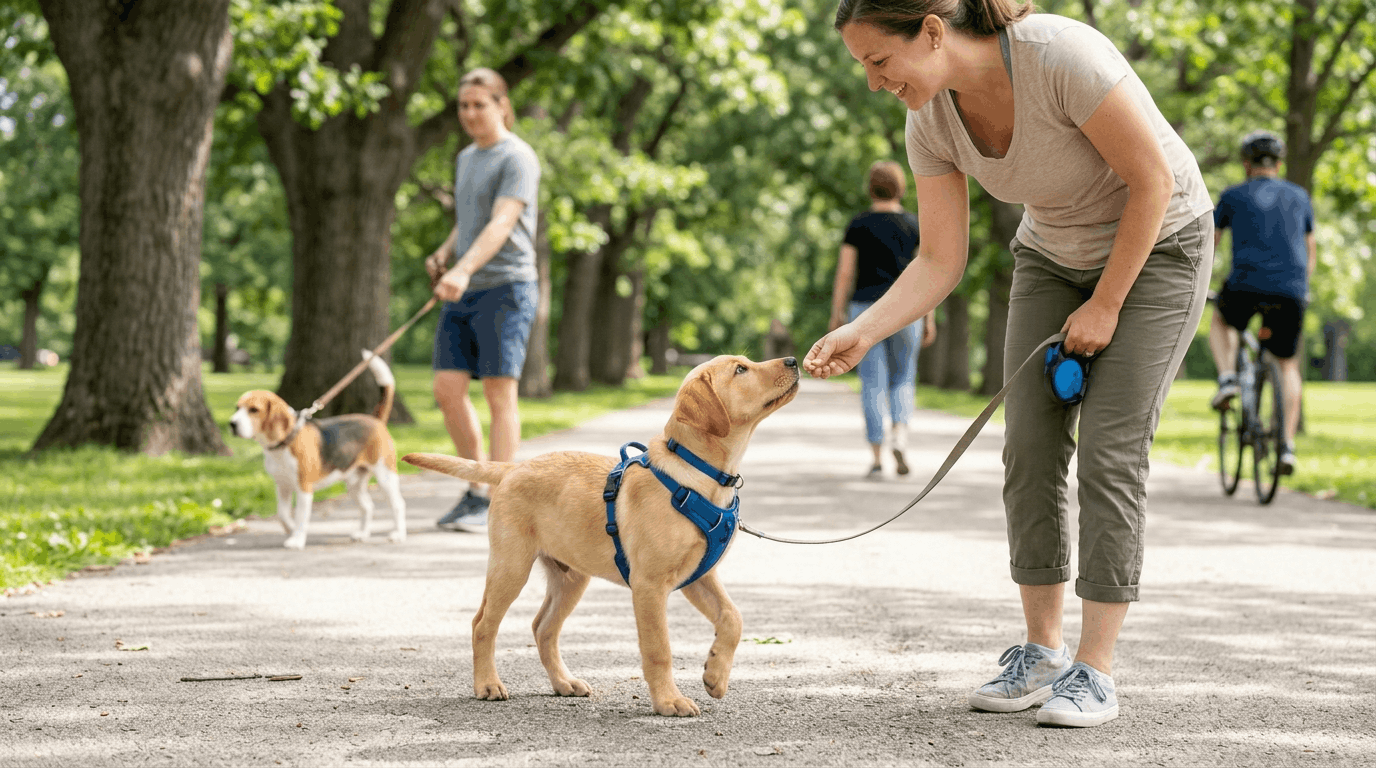
Learning how to socialize puppy for walks is one of the most important steps you can take as a dog owner. Early experiences shape how your puppy reacts to the world, and walks introduce a wide range of sights, sounds, and situations. When done correctly, socialization builds confidence and prevents fear-based behaviors later in life. However, rushing the process or exposing your puppy too quickly can create stress instead of comfort.
Many puppies feel overwhelmed when they first step outside. New smells, moving objects, and unfamiliar people can trigger uncertainty. Because of this, your goal is not to force exposure but to guide your puppy through calm and positive experiences. When you socialize puppy for walks gradually, you help them develop trust and emotional stability that lasts well into adulthood.
Why Early Socialization Matters
Puppies go through a critical learning period where they are more open to new experiences. During this stage, positive exposure helps them accept the world as safe and manageable. If they miss this window or have negative experiences, they may become anxious or reactive later.
When you consistently socialize puppy for walks, you reduce the chances of barking, pulling, or fear responses. Instead, your puppy learns to observe calmly and respond appropriately. This foundation creates smoother and more enjoyable walks as your dog grows.
Moreover, early socialization improves adaptability. Dogs that experience different environments tend to handle change better, which is helpful in everyday situations like traveling or visiting new places.
Start Inside Before Going Outside
Although it may seem surprising, socialization begins at home. Before stepping outside, your puppy should feel comfortable with basic sounds, movements, and interactions. This preparation makes the transition to outdoor walks much easier.
Start by introducing household noises like vacuum cleaners, doorbells, or footsteps. Pair these experiences with treats or praise to create positive associations. As your puppy becomes more relaxed, you build the confidence needed to socialize puppy for walks successfully.
Additionally, practice simple commands such as sit, stay, and look. These cues help you guide your puppy’s attention during walks, especially when distractions appear.
Introduce The Outside World Gradually
The first outdoor experiences should be calm and controlled. Instead of heading straight into busy streets or crowded parks, begin in quiet areas with minimal distractions. This approach allows your puppy to explore without feeling overwhelmed.
Let your puppy observe their surroundings at their own pace. Avoid pulling or forcing movement, as this can increase stress. Instead, encourage curiosity and reward calm behavior. Over time, your puppy will become more comfortable with new environments.
When you socialize puppy for walks in gradual steps, you prevent fear from developing. Each positive experience builds on the previous one, creating a steady path toward confidence.
Use Positive Reinforcement Consistently
Positive reinforcement is one of the most effective tools during socialization. Whenever your puppy reacts calmly to a new situation, reward them immediately. This helps them associate unfamiliar experiences with positive outcomes.
Treats, praise, or gentle play can all serve as rewards. The key is timing. Reinforce the calm behavior as it happens so your puppy clearly understands what is expected. This method makes it easier to socialize puppy for walks without creating pressure or confusion.
Consistency also plays a major role. Repeating these positive interactions daily helps reinforce learning and build reliable behavior patterns.
Expose Your Puppy To Different Experiences
Variety is essential when it comes to socialization. Your puppy should encounter different surfaces, sounds, and environments to develop confidence. This includes walking on grass, pavement, sand, or gravel, as well as hearing traffic, bicycles, and voices.
Introduce new experiences gradually and in controlled settings. For example, allow your puppy to watch people from a distance before moving closer. This reduces the chance of overwhelming them.
As you continue to socialize puppy for walks, these varied experiences help your puppy adapt to real-world situations. Over time, they become less reactive and more relaxed in unfamiliar environments.
Teach Calm Behavior Around People And Dogs
Meeting new people and dogs is a common part of walks, but these interactions should be handled carefully. Not every encounter needs direct contact. In fact, observing from a distance often provides a better learning experience.
Encourage your puppy to remain calm when others pass by. Reward them for staying relaxed instead of jumping or barking. If your puppy becomes too excited or nervous, increase the distance and try again later.
By managing these interactions thoughtfully, you can socialize puppy for walks without creating overstimulation. This helps your puppy learn that calm behavior leads to positive outcomes.
Recognize Signs Of Stress Early
Understanding your puppy’s body language is crucial during socialization. Signs of stress may include trembling, excessive panting, tucked tail, or avoidance. When you notice these signals, it is important to respond quickly.
Instead of pushing forward, create distance from the trigger and allow your puppy to relax. This prevents negative associations from forming. Gradual exposure is always more effective than forcing your puppy to face fear.
When you pay attention to these cues, you can adjust your approach and continue to socialize puppy for walks in a supportive way.
Build A Consistent Walking Routine
Routine helps puppies feel secure. Walking at the same time each day creates predictability, which reduces anxiety. Your puppy begins to understand what to expect, making each outing more comfortable.
Start with short walks and gradually increase the duration as your puppy gains confidence. Consistency is key, as repeated exposure reinforces positive behavior. Over time, your puppy will view walks as a normal and enjoyable part of their day.
A structured routine also supports your efforts to socialize puppy for walks by providing regular opportunities for learning and growth.
Avoid Common Socialization Mistakes
Many owners unintentionally rush the socialization process, which can lead to setbacks. Introducing too many new experiences at once often overwhelms puppies and creates fear instead of confidence.
Another common mistake is forcing interactions. While it may seem helpful to encourage greetings, your puppy should always have the choice to approach or observe from a distance. Respecting their comfort level builds trust.
Additionally, avoid punishing fearful behavior. Fear is not disobedience, and punishment can increase anxiety. Instead, focus on creating positive and supportive experiences.
Supporting Long-Term Confidence
Socialization does not end after the puppy stage. Continued exposure to new environments and experiences helps maintain confidence as your dog grows. Regular walks, new routes, and varied activities keep your dog mentally engaged.
When you consistently socialize puppy for walks over time, you reinforce calm and balanced behavior. This ongoing effort ensures your dog remains adaptable and comfortable in different situations.
Moreover, combining socialization with training strengthens communication. Your dog learns to look to you for guidance, which improves overall behavior during walks.
Conclusion
Teaching your puppy to feel calm and confident during walks is a gradual process that requires patience and consistency. By taking the time to socialize puppy for walks properly, you set the foundation for a lifetime of positive experiences. Each step, no matter how small, contributes to building trust and reducing fear.
Although progress may take time, the results are worth the effort. A well-socialized puppy grows into a relaxed and confident dog that enjoys exploring the world. With the right approach, your walks can become peaceful, rewarding moments that strengthen your bond and create lasting memories.
FAQ
- When should I start introducing my puppy to outdoor walks?
You can begin once your puppy has basic vaccinations and feels comfortable with their environment, usually around 8 to 12 weeks. - How long should early walks last for a young puppy?
Short walks of 5 to 10 minutes are ideal at first, gradually increasing as your puppy gains confidence. - What should I do if my puppy seems scared outside?
Give them space, stay calm, and allow them to observe from a distance while offering gentle encouragement. - Can socialization help prevent barking during walks?
Yes, early exposure to different situations helps reduce fear and reactivity, leading to calmer behavior. - Is it okay for my puppy to meet every dog during walks?
No, controlled exposure is better. Not every interaction is necessary, and calm observation is often more beneficial.