Learning how to train your dog effectively is one of the most rewarding parts of being a dog owner, yet it can also feel confusing at first. Many people struggle not because they lack effort, but because they lack clarity and consistency in their approach. When you shift your focus toward clear communication and confident leadership, everything begins to change. Instead of guessing what works, you begin to guide your dog with purpose, creating a calmer and more responsive companion.
Dogs thrive when expectations are simple and consistent. However, mixed signals often lead to frustration on both sides. For this reason, the ability to train your dog effectively depends on how clearly you communicate what you want. When your dog understands what earns rewards and what does not, learning becomes faster and far more enjoyable.
Why Clarity Matters In Dog Training
Clarity removes confusion and builds trust. When your dog knows exactly what you expect, they feel more secure and confident. On the other hand, inconsistent commands or unclear signals can create hesitation or unwanted behavior. This is why the foundation to train your dog effectively begins with simple, repeatable cues.
For example, using one word for a command and sticking to it helps your dog learn faster. If you alternate between “come,” “here,” and “over,” your dog may struggle to understand. Instead, consistency allows your dog to connect the command with the action quickly.
Additionally, timing plays a key role. When you reward or correct behavior at the right moment, your dog clearly understands the cause and effect. This precision is essential if you want to train your dog effectively without confusion.
Building Confidence As A Dog Owner
Confidence is just as important as technique. Dogs naturally respond to calm and assertive energy. If you feel uncertain, your dog may mirror that hesitation. Therefore, building your own confidence helps create a more stable training environment.
Start with simple exercises and gradually increase difficulty. Each small success builds your confidence and strengthens your communication with your dog. Over time, this confidence allows you to train your dog effectively even in more distracting environments.
It also helps to stay patient. Mistakes are part of the process, and learning takes time. Instead of reacting with frustration, focus on guiding your dog toward the correct behavior. This mindset makes training more positive and productive.
Using Positive Reinforcement For Better Results
Positive reinforcement remains one of the most effective ways to teach new behaviors. By rewarding actions you want to see, you encourage your dog to repeat them. see, you encourage your dog to repeat them. This approach creates a strong and positive learning experience.
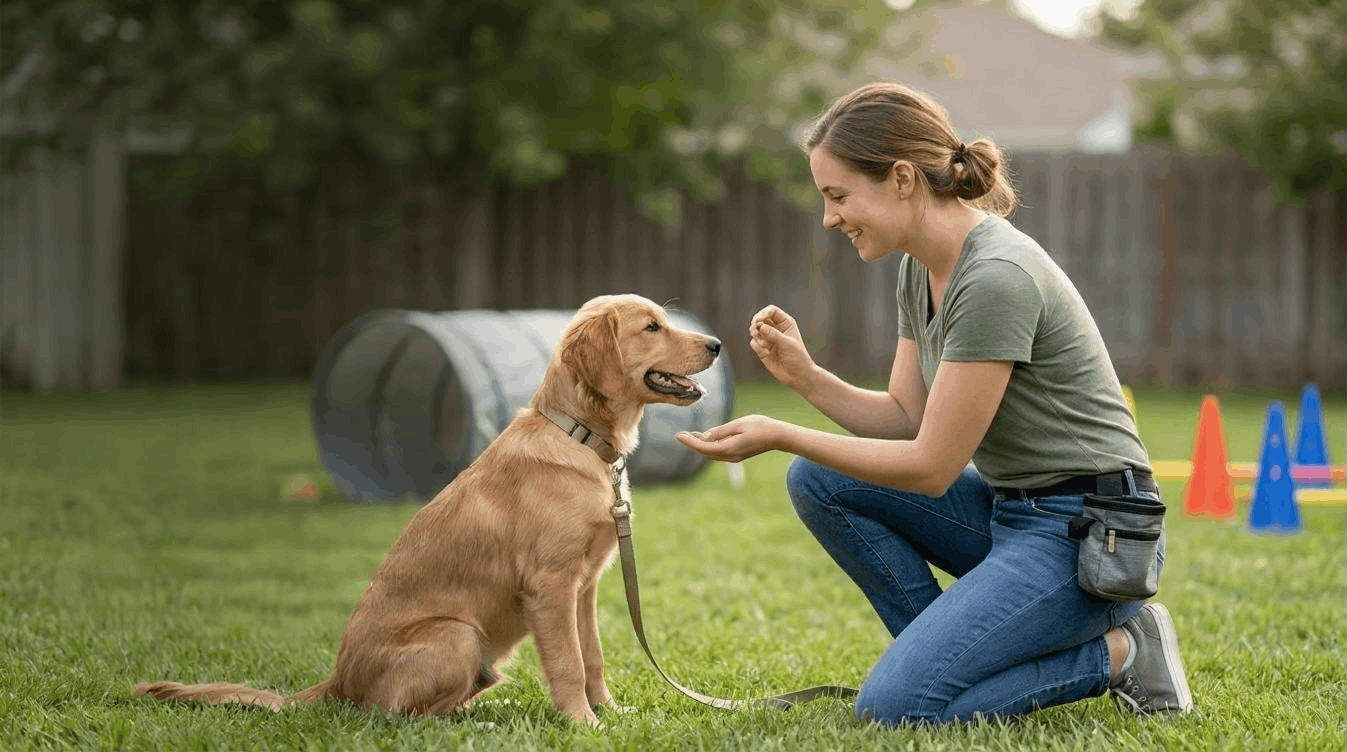
Treats, praise, and play are all effective rewards. The key is to deliver them immediately after the desired behavior. When you do this consistently, your dog begins to understand what earns rewards. This makes it easier to train your dog effectively without relying on punishment.
Moreover, positive reinforcement strengthens your bond. Your dog begins to associate training with good experiences, which increases motivation and engagement. Over time, this leads to more reliable behavior in everyday situations.
Creating A Structured Training Routine
Routine provides stability, which helps dogs learn faster. Short, focused sessions work better than long, inconsistent ones. Ideally, training should happen daily, even if only for a few minutes.
Consistency in timing, commands, and rewards is essential. When your dog knows what to expect, they become more focused and responsive. This structured approach allows you to train your dog effectively while reducing stress and confusion.
Incorporating training into daily activities also helps reinforce learning. Asking your dog to sit before meals or wait at the door creates natural opportunities to practice commands. These small moments build strong habits over time.
Managing Distractions With Control And Patience
Training in a quiet environment is important at the beginning, but real progress happens when distractions are introduced. Gradually exposing your dog to new environments helps them learn to stay focused in different situations.
Start with mild distractions and increase difficulty slowly. If your dog becomes overwhelmed, reduce the intensity and rebuild confidence. This step-by-step approach ensures you can train your dog effectively without setbacks.
Using distance is another helpful strategy. If a distraction is too close, your dog may react instead of focusing. Creating space allows your dog to stay calm and respond to your commands.
Understanding Your Dog’s Behavior
Every dog learns differently, so understanding your dog’s personality is essential. Some dogs are highly energetic, while others are more cautious. Adapting your approach based on these traits improves your results.
For instance, an energetic dog may need more physical activity before training. A tired dog is often more focused and receptive. Meanwhile, a shy dog may require slower exposure and extra encouragement.
Observing body language also helps you adjust your training. Signs of stress, such as avoidance or tension, indicate that your dog may need a break. By paying attention, you can train your dog effectively while maintaining a positive experience.
Avoiding Common Training Mistakes
Many training challenges come from simple mistakes. One common issue is inconsistency. Changing rules or commands confuses your dog and slows progress. Therefore, maintaining clear and consistent expectations is crucial.
Another mistake is expecting quick results. Training is a process, and rushing can lead to frustration. Instead, focus on steady improvement and celebrate small wins.
Additionally, avoid reinforcing unwanted behavior. For example, giving attention to barking can encourage it. Understanding how your actions influence behavior is key if you want to train your dog effectively.
Strengthening Communication Through Practice
Communication improves with repetition and practice. The more you work with your dog, the better you understand each other. This connection makes training smoother and more enjoyable.
Practice commands in different environments to build reliability. Start at home, then move to quieter outdoor areas, and eventually introduce more distractions. This progression helps your dog respond consistently.
Over time, your ability to train your dog effectively becomes second nature. Your dog learns to trust your guidance, and you gain confidence in your approach.
Building A Lasting Bond Through Training
Training is not just about behavior; it is about building a relationship. When you train with patience and positivity, you create trust and mutual respect. This connection strengthens your bond and improves your dog’s overall well-being.
Spending time together during training also provides mental stimulation. Dogs enjoy learning and solving problems, which keeps them engaged and happy. As a result, training becomes an enriching experience rather than a chore.
By focusing on communication and consistency, you create a partnership that benefits both you and your dog.
Conclusion
Learning to train your dog effectively with confidence and clarity transforms your daily life as a dog owner. Instead of reacting to unwanted behavior, you guide your dog toward positive habits through clear communication and consistent practice. Although the process requires patience, the results are worth the effort.
Over time, your dog becomes more responsive, calm, and confident. More importantly, your bond grows stronger as you work together and build trust. With the right mindset and approach, you can create lasting change and enjoy a more balanced relationship with your dog.
FAQ
- What is the best way to start training a dog at home?
Begin with simple commands like sit and stay, using rewards to reinforce correct behavior consistently. - How long should daily training sessions be?
Short sessions of 10 to 15 minutes work best, as they keep your dog focused and engaged. - Can older dogs still learn new behaviors?
Yes, dogs of any age can learn with patience, consistency, and positive reinforcement. - What should I do if my dog does not respond to commands?
Check your timing, reduce distractions, and ensure you are using clear and consistent cues. - Is it better to train indoors or outdoors?
Start indoors for focus, then gradually move outdoors to build reliability in real-world situations.