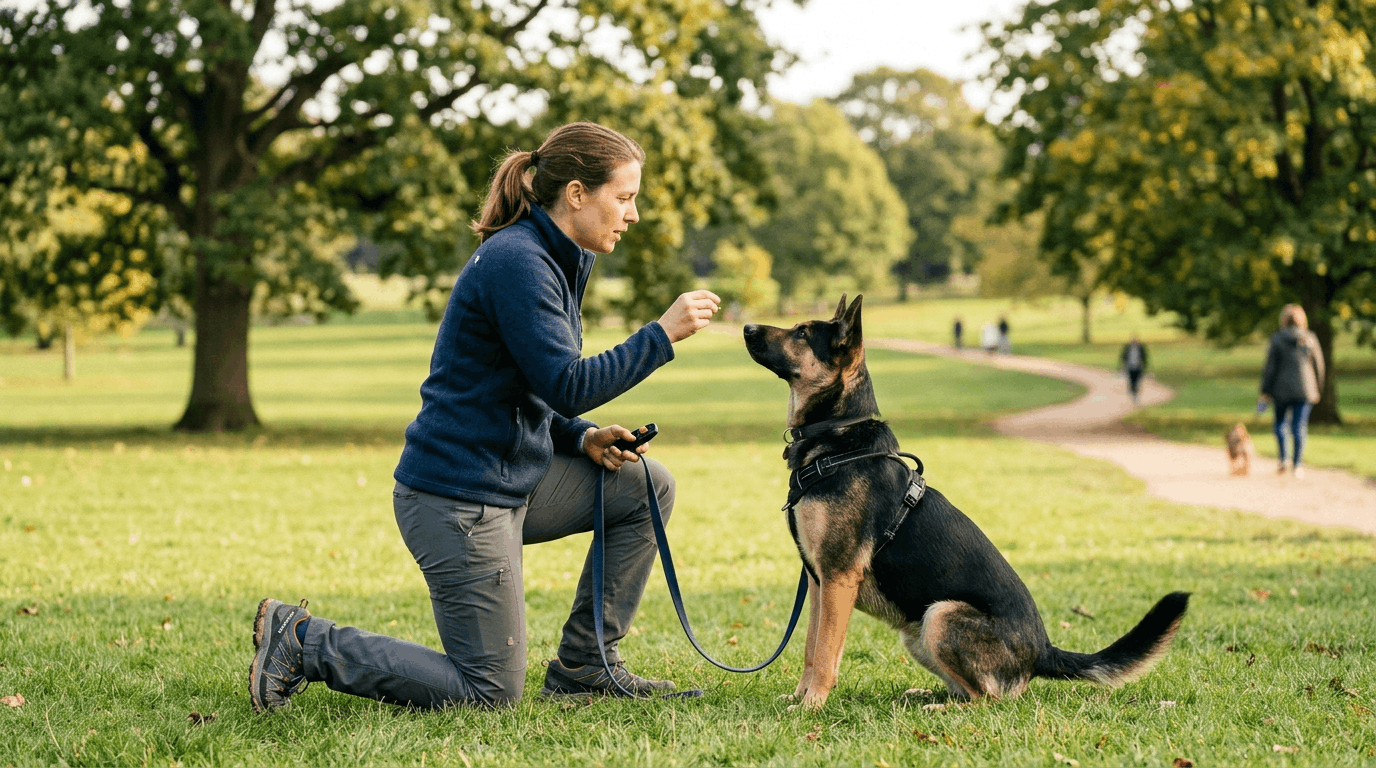
Walking a reactive dog in public can feel overwhelming, especially when unexpected triggers appear at any moment. Reactive dog training outdoors is essential if you want to turn stressful walks into calm and controlled experiences. Dogs may react by barking, lunging, or pulling, often due to fear, excitement, or frustration. Because of this, learning how to guide your dog through these situations with confidence makes a significant difference in both behavior and safety.
Many owners feel embarrassed or unsure when their dog reacts in public. However, this behavior is more common than people think. Instead of trying to control everything instantly, focus on understanding your dog’s emotions first. Over time, this approach builds trust and teaches your dog how to respond calmly in challenging environments.
Understanding Triggers in Outdoor Training
Before you begin, it is important to understand why your dog reacts. Reactive dog training outdoors starts with identifying triggers such as other dogs, people, loud noises, or fast movement. Each dog has unique sensitivities, so observing patterns helps you respond more effectively.
In many cases, reactivity comes from fear or uncertainty. Dogs may feel threatened and respond defensively to protect themselves. In other situations, excitement can lead to overstimulation, which results in similar behaviors. Therefore, recognizing the emotional cause is key to long-term success.
In addition, lack of early socialization can contribute to reactivity. Dogs that were not exposed to different environments may struggle more when encountering new situations. That is why gradual exposure plays a critical role in behavior improvement.
Building Focus Before Going Outside
Preparation is essential before tackling busy environments. Reactive dog training outdoors becomes more effective when your dog understands basic commands in a controlled setting. Skills such as sit, stay, and focus create a foundation for better communication.
Practice these commands at home or in quiet areas first. This allows your dog to learn without distractions. Once your dog responds consistently, you can begin introducing more challenging environments.
In addition, building engagement with your dog is crucial. When your dog sees you as a source of guidance and reward, they are more likely to stay focused even when distractions increase.
Managing Distance And Exposure Safely
Distance is one of the most powerful tools you can use. Keeping your dog far enough from triggers helps them stay calm and aware without reacting. This step is a core part of reactive dog training outdoors because it allows learning without pressure.
Gradually reduce the distance as your dog becomes more comfortable. This process helps your dog adjust without feeling overwhelmed. Rushing this step often leads to setbacks, so patience is essential.
In addition, choose environments wisely. Start in quieter areas before moving into busier spaces. This gradual approach helps build confidence and improves behavior over time.
Using Positive Reinforcement Consistently
Positive reinforcement is one of the most effective training methods. When your dog notices a trigger but stays calm, reward that behavior immediately. This teaches your dog that calm responses lead to positive outcomes.
Timing is important. Rewards should be given right after the desired behavior so your dog understands what worked. Over time, your dog will begin to associate triggers with calm behavior instead of stress.
High-value treats can help maintain focus in busy environments. These rewards keep your dog engaged and motivated, especially when distractions increase.
Redirecting Behavior During Reactions
Even with preparation, reactions can still happen. When your dog begins to react, redirect their attention back to you using a command or treat. This helps break the cycle before it escalates.
Avoid pulling or raising your voice, as this can increase stress. Instead, stay calm and guide your dog away from the trigger if needed. Creating space allows your dog to regain control and relax.
Practicing focus exercises regularly strengthens your dog’s ability to respond in real situations. Over time, this makes outings smoother and more manageable.
Reading Body Language Early
Understanding your dog’s body language allows you to act before reactions begin. Signs such as stiff posture, intense staring, or sudden alertness often appear before barking or lunging.
By recognizing these signals early, you can intervene quickly. Increasing distance or redirecting attention prevents the situation from escalating. This proactive approach is essential for progress.
In addition, observing your dog helps you adjust your training strategy. Each dog responds differently, so flexibility is key to success.
Avoiding Common Outdoor Training Mistakes
Certain mistakes can slow progress or increase stress. One of the most common issues is exposing your dog to too much too soon. Gradual exposure is far more effective than overwhelming situations.
Another mistake is inconsistency. If rules change, your dog becomes confused. Maintaining clear and consistent expectations improves communication and results.
Punishing reactive behavior is also counterproductive. It can increase fear and damage trust. Instead, focus on guiding your dog toward calm responses using positive reinforcement.
Building Long Term Confidence Outdoors
Confidence develops through repeated positive experiences. Short, consistent outings are more effective than long, stressful ones. Each successful walk builds trust and reduces anxiety.
As your dog improves, you will notice fewer reactions and better focus. This progress takes time, but consistency leads to lasting results. Celebrate small improvements, as they show meaningful growth.
In addition, your calm energy plays a role. Dogs often mirror their owner’s emotions, so staying relaxed helps your dog feel secure.
Conclusion
Helping your dog stay calm in outdoor environments requires patience, consistency, and understanding. Reactive dog training outdoors is not about forcing behavior but about building confidence step by step. By focusing on triggers, using positive reinforcement, and practicing regularly, you can create calmer and more enjoyable walks.
Although progress may take time, the results are worth it. Your dog will become more relaxed, and your bond will grow stronger. With the right approach, outdoor training becomes a positive experience for both of you.
FAQ
- Why does my dog react to other dogs outside?
Dogs often react due to fear, excitement, or lack of social exposure. - How long does training usually take?
It varies, but consistent effort can show results within a few weeks. - Should I avoid busy places completely?
At first, yes, but gradual exposure is important for long-term progress. - Can treats help reduce reactions?
Yes, rewards reinforce calm behavior and improve focus. - Will my dog ever fully stop reacting?
Many dogs improve significantly, but some may always need gentle management.