
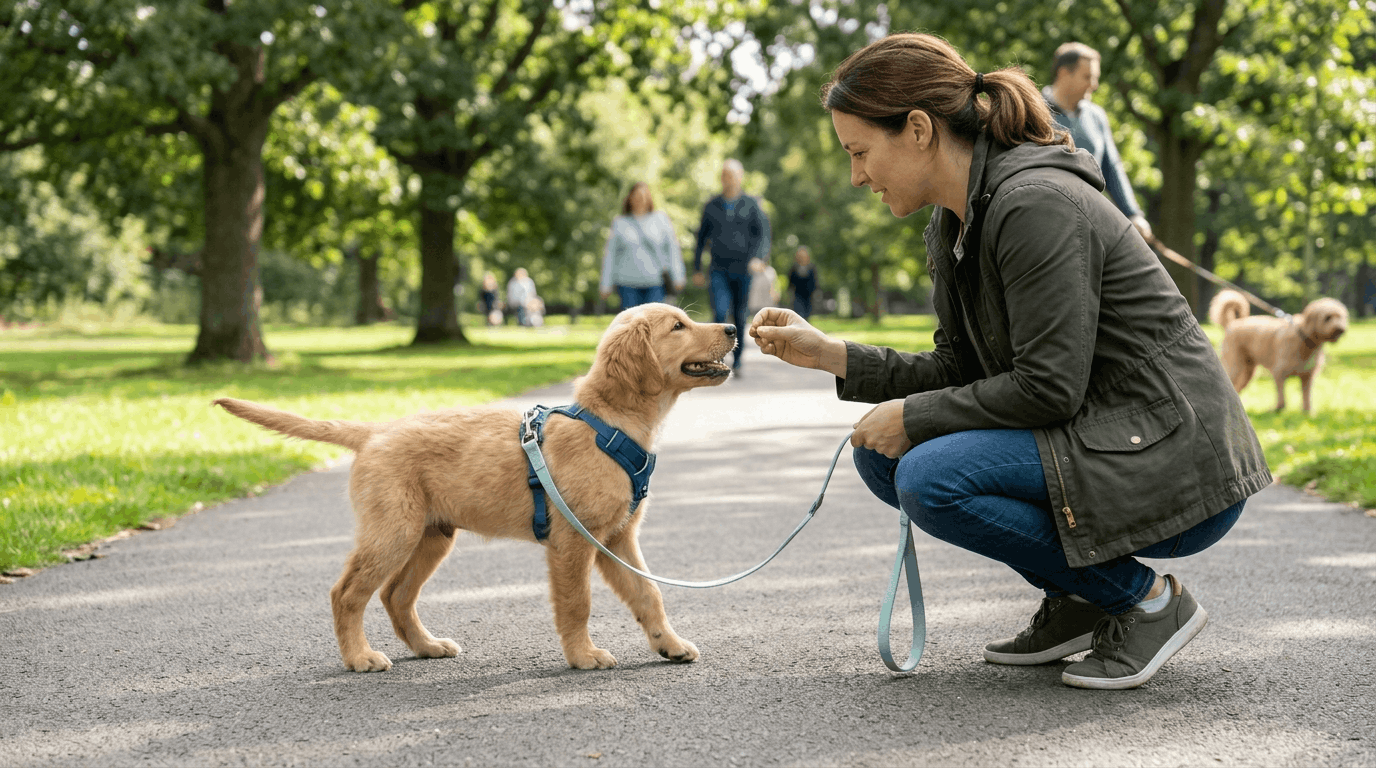
Building puppy confidence for walks is one of the most important steps you can take as a new dog owner. While it may seem simple to clip on a leash and head outside, many puppies find the world overwhelming at first. New sounds, unfamiliar people, and unexpected movements can quickly turn a walk into a stressful experience. As a result, puppies may freeze, pull, bark, or refuse to move altogether. However, with the right approach, you can build puppy confidence for walks and help your dog feel calm and secure in any environment.
In the early stages, your puppy is constantly learning how to interpret the world. Therefore, every walk becomes an opportunity to shape their reactions. If those experiences feel safe and positive, your puppy grows more confident. On the other hand, if they feel overwhelmed, fear can develop. Because of this, focusing on puppy confidence for walks from the beginning creates a strong foundation for lifelong behavior.
Why Confidence Matters During Early Walks
Confidence affects how your puppy responds to everything they encounter outside. When you build puppy confidence for walks, your dog becomes more curious and less reactive. Instead of panicking at new stimuli, they learn to observe and stay calm. This shift makes walks smoother and far more enjoyable for both of you.
Additionally, confident puppies are easier to train. They can focus better, respond to commands faster, and adapt to new situations without stress. In contrast, a fearful puppy may ignore cues or react unpredictably. Therefore, investing time in puppy confidence for walks early on saves you from dealing with more serious behavior issues later.
It is also important to remember that confidence is not something puppies are born with. It develops through repeated positive experiences. Each successful walk builds trust, not only in the environment but also in you as their guide.
Understanding What Overwhelms Your Puppy
Before you can build puppy confidence for walks, you need to recognize what might be causing stress. Puppies experience the world in a much more intense way than humans. Sounds seem louder, movements appear faster, and unfamiliar objects can feel threatening.
For example, a passing car, a barking dog, or even a fluttering plastic bag can trigger fear. When this happens, your puppy may stop walking, pull away, or try to hide. These reactions are not signs of stubbornness. Instead, they show that your puppy is unsure how to respond.
Because of this, it is important to observe your puppy closely. Pay attention to their body language, such as tucked tails, flattened ears, or hesitation. These signals tell you when your puppy feels uncomfortable. Once you identify these triggers, you can start working on puppy confidence for walks in a controlled and supportive way.
Start In A Safe And Familiar Environment
One of the best ways to build puppy confidence for walks is to begin in a quiet and familiar area. Your backyard, a calm street, or a low-traffic park provides a great starting point. In these environments, your puppy can explore without becoming overwhelmed.
At first, keep walks short and relaxed. Allow your puppy to move at their own pace instead of forcing them forward. This helps them feel in control, which is essential for building confidence. As your puppy becomes more comfortable, you can gradually increase the length and complexity of your walks.
It also helps to repeat the same route during the early stages. Familiarity reduces anxiety, allowing your puppy to focus on learning rather than reacting to constant changes. Over time, this consistency strengthens puppy confidence for walks and prepares your dog for new environments.
Use Positive Reinforcement To Build Trust
Positive reinforcement is one of the most effective tools when working on puppy confidence for walks. Whenever your puppy shows calm or curious behavior, reward them immediately. This can include treats, praise, or gentle encouragement.
For example, if your puppy calmly watches a passing car instead of reacting, reward that moment. This teaches them that staying calm leads to positive outcomes. Gradually, your puppy begins to associate outdoor experiences with safety and rewards.
It is also important to keep your tone encouraging and relaxed. Puppies pick up on your emotions, so if you remain calm, they are more likely to feel secure. By combining rewards with a reassuring presence, you create an environment where puppy confidence for walks can grow naturally.
Introduce New Experiences Gradually
While exposure is important, too much too soon can overwhelm your puppy. Therefore, you should introduce new experiences slowly. Once your puppy feels comfortable in a quiet setting, begin adding mild distractions, such as distant noises or a few people walking by.
This gradual progression helps your puppy adapt without becoming stressed. Each new experience should feel manageable rather than intimidating. If your puppy shows signs of fear, take a step back and return to a calmer environment.
By pacing your training, you allow puppy confidence for walks to develop steadily. Over time, your puppy will learn that new situations are not something to fear, but rather something to explore.
Encourage Exploration Without Pressure
Allowing your puppy to explore is essential, but it should never feel forced. When you build puppy confidence for walks, your role is to guide rather than control every movement. Let your puppy sniff, observe, and take in their surroundings at their own speed.
Exploration helps your puppy gather information about the environment. Through this process, unfamiliar things become familiar, which reduces fear. However, if you rush your puppy or pull them toward something they find scary, you can weaken their confidence.
Instead, encourage curiosity by using gentle cues and rewards. If your puppy approaches something new on their own, praise them. This reinforces brave behavior and supports the development of puppy confidence for walks.
Create A Calm And Predictable Routine
Routine plays a powerful role in building confidence. When your puppy knows what to expect, they feel more secure. Establish a consistent walking schedule and follow a similar pattern each time you go out.
Start with calm preparation before the walk. If your puppy becomes overly excited, wait until they settle before stepping outside. This sets the tone for a relaxed experience.
During the walk, maintain a steady pace and clear expectations. Over time, your puppy will begin to anticipate what happens next. This predictability strengthens puppy confidence for walks and reduces anxiety.
Build Focus And Connection During Walks
Strong focus on you helps your puppy feel safe in unfamiliar situations. When you build puppy confidence for walks, you are also strengthening your bond. A connected puppy is less likely to react to distractions because they look to you for guidance.
You can build this connection through simple exercises. Call your puppy’s name and reward eye contact. Practice short training moments during the walk to keep their attention on you.
As your puppy becomes more engaged, their confidence grows. Instead of reacting to every stimulus, they learn to check in with you. This shift makes walks smoother and more enjoyable.
Handle Setbacks With Patience
Progress is not always linear, especially when working on puppy confidence for walks. Some days will feel easier, while others may present new challenges. This is completely normal and part of the learning process.
If your puppy has a negative experience, avoid reacting with frustration. Instead, calmly guide them away from the situation and return to a comfortable environment. Then, rebuild their confidence with positive experiences.
Patience is essential because confidence develops over time. Each small success contributes to long-term improvement. By staying consistent and supportive, you help your puppy overcome challenges and continue growing.
Conclusion
Building puppy confidence for walks is not about rushing progress, but about creating positive experiences that shape how your dog sees the world. When you focus on calm exposure, consistent routines, and positive reinforcement, your puppy learns to approach new environments with curiosity rather than fear.
Although it may take time, the results are worth the effort. Confident puppies become well-behaved dogs that enjoy exploring, listening, and staying connected with their owners. Ultimately, when you invest in puppy confidence for walks, you are setting the stage for a lifetime of calm, enjoyable adventures together.
FAQ
- Why is my puppy scared during walks?
Puppies are still learning about the world, so new sights and sounds can feel overwhelming and unfamiliar. - How can I help my puppy feel safer outside?
Start in quiet areas, use rewards, and gradually introduce new environments at a comfortable pace. - How long does it take to build confidence outdoors?
Most puppies improve within a few weeks, but progress depends on consistency and positive experiences. - Should I carry my puppy if they refuse to walk?
It is better to encourage them gently rather than relying on carrying, which can limit their learning. - Can older puppies still gain confidence on walks?
Yes, with patience and consistent training, dogs of any age can become more confident outdoors.