
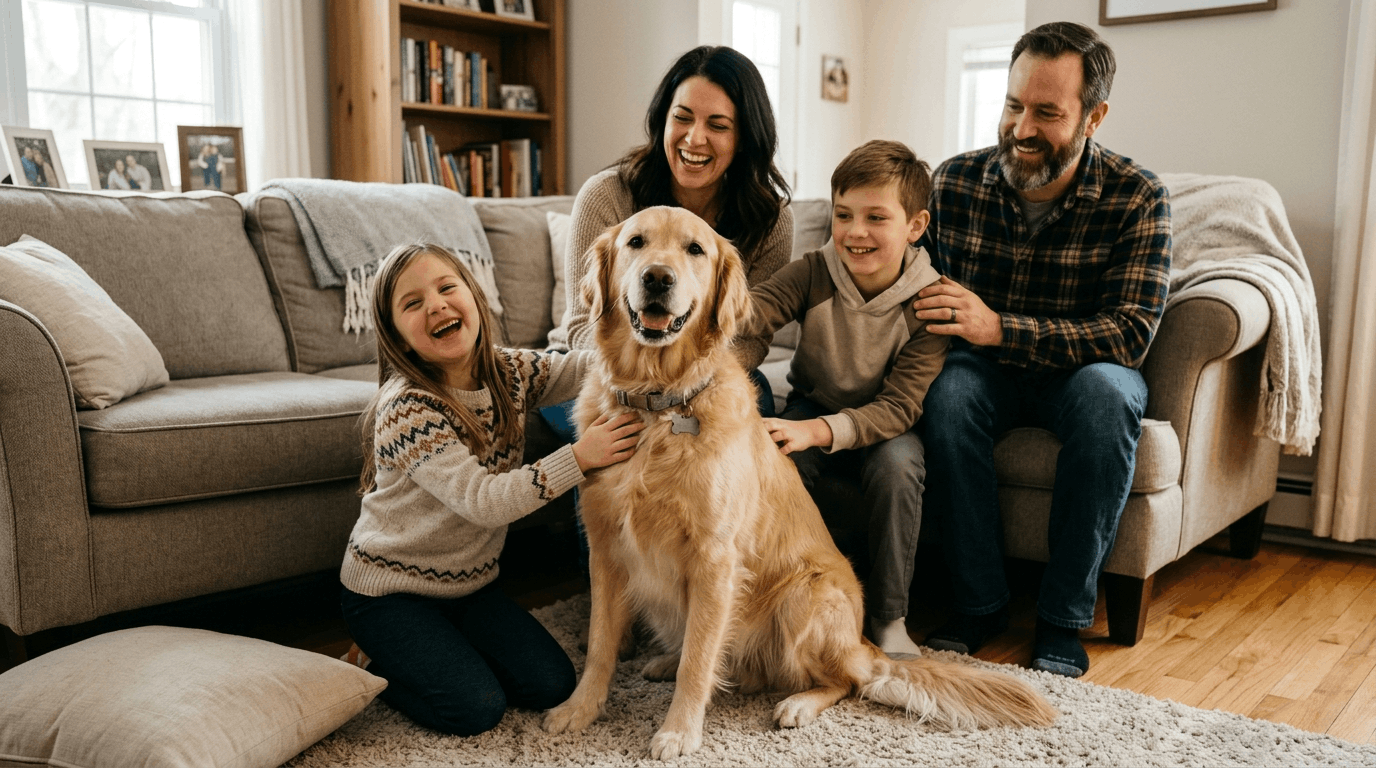
Every family wants a dog that feels gentle, trustworthy, calm, and safe around children. Dogs often become beloved companions because they provide comfort, loyalty, emotional connection, and joyful energy inside the home. However, creating a safe environment between dogs and children requires intentional training, structure, supervision, and emotional awareness from the beginning. A safe family dog does not simply happen naturally. Instead, positive behavior develops gradually through healthy routines, proper socialization, calm leadership, and respectful interactions.
Dogs and children can build incredibly strong bonds when adults guide the relationship carefully.
Importantly, even loving dogs need support learning how to behave appropriately around young children.
Likewise, children must learn how to interact respectfully and safely with dogs.
Many behavioral problems happen because expectations remain unclear or interactions become overwhelming for the dog.
Fortunately, families can create healthier relationships by understanding canine behavior and emotional needs more deeply.
Calm guidance, consistency, patience, and supervision all play essential roles in raising emotionally balanced dogs that interact safely with children.
When families prioritize emotional stability and trust, dogs often become calmer, more confident, and more reliable companions overall.
Why Emotional Stability Matters
A calm emotionally balanced dog usually handles family life more safely and predictably.
Safe family dog behavior depends heavily on emotional regulation rather than obedience commands alone.
Dogs experiencing stress, fear, frustration, or overstimulation often react impulsively because their emotional systems feel overwhelmed.
Meanwhile, emotionally secure dogs usually process situations more calmly and thoughtfully.
Families should therefore focus on building confidence, trust, and emotional balance from an early age.
Stable routines, gentle communication, mental stimulation, and positive experiences all help dogs feel emotionally secure.
Importantly, dogs that feel safe and understood often display healthier behavior naturally without needing constant correction.
Emotional wellness strongly influences how dogs respond to children, visitors, noise, excitement, and daily family activity.
Early Socialization Builds Confidence
Proper socialization helps dogs feel comfortable around different people, sounds, environments, and experiences.
Safe family dog habits often begin during early developmental stages when puppies learn how the world works.
Positive exposure to children, household noise, movement, and gentle handling helps dogs build emotional confidence gradually.
However, socialization should remain calm and controlled rather than chaotic or overwhelming.
Fearful experiences during puppyhood may create long-term anxiety or defensive reactions later.
Families should therefore introduce new situations gradually while ensuring the dog feels emotionally comfortable throughout the process.
Importantly, quality matters more than quantity during socialization.
Positive experiences build trust and resilience far more effectively than forcing dogs into stressful interactions repeatedly.
Teaching Calm Behavior Around Children
Children naturally move quickly, make noise, and behave unpredictably at times.
Safe family dog behavior improves when dogs learn how to stay calm around excitement and movement.
Owners should reward relaxed behavior consistently whenever children play nearby.
Treats, praise, and calm attention help dogs associate children with positive experiences instead of stress or frustration.
Importantly, dogs should also learn that calm behavior gains rewards while jumping, barking, or rough play does not.
Teaching basic cues like “sit,” “stay,” and “go to your bed” helps create structure during busy family moments.
Simple daily practice often creates stronger habits than occasional long training sessions alone.
Why Supervision Is Always Necessary
Even gentle well-trained dogs should never remain completely unsupervised around young children.
Safe family dog relationships rely heavily on active adult supervision and guidance during interactions.
Dogs may feel overwhelmed, startled, tired, or uncomfortable unexpectedly.
Likewise, children sometimes unintentionally pull ears, climb on dogs, disturb resting spaces, or handle dogs too roughly.
Most incidents happen because adults miss early stress signals or allow inappropriate interaction patterns to continue.
Supervision allows adults to intervene calmly before situations escalate emotionally.
Importantly, supervision protects both the child and the dog while strengthening long-term trust within the household.
Understanding Canine Body Language
Dogs communicate emotional discomfort through body language long before growling or snapping occurs.
Safe family dog management requires families to recognize stress signals early and respond appropriately.
Lip licking, yawning, turning away, stiff posture, tucked tails, avoidance, or sudden stillness may indicate discomfort or stress.
Many people misunderstand these warning signs because dogs often communicate subtly at first.
Families should teach children to respect space whenever dogs appear uncomfortable or tired.
Understanding emotional signals helps prevent misunderstandings while protecting the dog’s sense of safety.
Dogs that feel heard and respected usually become more relaxed and emotionally stable around children over time.
Teaching Children Respectful Interaction
Children also need guidance learning how to interact safely with dogs.
Safe family dog relationships improve significantly when children understand respectful boundaries and calm behavior.
Kids should avoid chasing dogs, hugging tightly, disturbing resting dogs, or interrupting meals and chew time.
Running, screaming, and rough handling sometimes overwhelm even patient dogs emotionally.
Adults should model calm respectful interaction consistently because children learn heavily through observation.
Teaching children to approach gently and allow dogs choice during interaction creates healthier emotional trust naturally.
Respect benefits both the child and the dog equally.
Creating Safe Spaces Inside the Home
Dogs need quiet places where they can rest comfortably without interruption.
Safe family dog behavior often improves when dogs have access to calm recovery spaces throughout the day.
Crates, beds, gated rooms, or quiet corners help dogs decompress emotionally during stressful or overstimulating moments.
Importantly, children should learn that resting areas remain private spaces for the dog.
Dogs lacking opportunities for emotional recovery sometimes become irritable, overwhelmed, or reactive more easily.
Safe resting spaces help dogs regulate stress while maintaining emotional stability within busy households.
Using Positive Reinforcement Daily
Positive reinforcement helps dogs learn desired behavior while strengthening emotional trust.
Safe family dog training works best when families reward calm, polite, and cooperative behavior consistently.
Praise, treats, toys, and affection all reinforce healthy habits naturally.
Importantly, owners should reward desirable behavior proactively rather than focusing only on mistakes.
Dogs repeat behaviors that consistently produce rewarding outcomes.
Calm greetings, gentle interactions, relaxed body language, and polite manners should therefore receive frequent encouragement.
Positive reinforcement creates stronger long-term results while reducing fear and emotional stress significantly.
Avoiding Harsh Punishment
Punishment often creates fear, anxiety, or defensive behavior that weakens trust within the family.
Safe family dog development depends heavily on emotional security and clear communication rather than intimidation.
Yelling, physical correction, or harsh leash handling may increase emotional tension and confusion.
Dogs trained through fear sometimes suppress warning signals instead of genuinely feeling calm or safe.
Supportive training methods encourage healthier emotional processing while strengthening the bond between dogs and family members.
Calm correction and redirection usually work far more effectively than emotional punishment.
Exercise Helps Prevent Behavioral Problems
Dogs with unspent energy often struggle remaining calm indoors.
Safe family dog routines should include daily physical exercise suited to the dog’s age, breed, and energy level.
Structured walks, play sessions, scent games, and interactive activities all support emotional balance naturally.
Exercise helps reduce frustration while improving focus and self-control.
However, balanced exercise matters more than nonstop intense activity.
Some dogs become overstimulated when exercise lacks structure or recovery periods.
Mental stimulation paired with physical movement creates healthier emotional outcomes overall.
Mental Enrichment Supports Calm Behavior
Mental stimulation plays a major role in emotional wellness and behavioral stability.
Safe family dog habits often improve when dogs receive opportunities to think, explore, and solve problems regularly.
Puzzle feeders, scent work, obedience games, chew toys, and interactive activities help reduce boredom and frustration naturally.
Mentally fulfilled dogs usually settle more calmly indoors because their emotional needs receive healthier fulfillment.
Enrichment also builds confidence while encouraging healthier emotional regulation over time.
Even short daily enrichment sessions can improve overall behavior significantly.
Consistency Builds Trust
Dogs learn best when expectations remain predictable and stable.
Safe family dog behavior becomes easier when all family members follow similar rules and communication patterns.
Mixed messages often confuse dogs because they cannot predict outcomes consistently.
For example, allowing jumping sometimes while discouraging it later creates frustration and uncertainty.
Families should therefore agree on household boundaries, routines, and behavioral expectations together.
Consistency creates emotional clarity that helps dogs succeed more naturally.
Dogs that understand expectations usually feel calmer and more confident inside the home.
Helping Dogs Feel Included
Dogs thrive emotionally when they feel connected to the family in healthy balanced ways.
Safe family dog relationships strengthen when dogs receive affection, interaction, training, and quality time consistently.
However, emotional balance matters more than constant attention.
Dogs also need opportunities for independence and calm rest throughout the day.
Balanced relationships create healthier emotional resilience while preventing clinginess or overdependence.
Simple shared routines such as walks, quiet relaxation, or training sessions help strengthen emotional bonds naturally.
Preparing Dogs for Stressful Situations
Busy households sometimes create unpredictable situations involving visitors, parties, loud noise, or sudden activity.
Safe family dog preparation involves teaching coping skills before stressful situations occur.
Practice calm behavior around doorbells, guests, movement, and excitement gradually.
Owners should reward calm responses while providing emotional support during challenging situations.
Dogs that practice emotional regulation regularly often handle stress more confidently long term.
Preparation helps prevent panic, fear, and reactive behavior during unexpected situations inside the home.
Building Long-Term Trust and Safety
Creating a safe family dog requires patience, emotional awareness, and steady daily guidance over time.
Dogs learn through repeated experiences that shape trust, emotional balance, and behavior gradually.
Families should focus on calm communication, positive reinforcement, structured routines, and respectful interaction consistently.
Importantly, emotional wellness matters just as much as obedience training.
Dogs that feel secure, mentally fulfilled, and emotionally understood usually become calmer and more reliable companions.
Children also benefit greatly from learning empathy, patience, and respectful behavior around animals.
Strong relationships develop when both dogs and children feel protected, supported, and guided appropriately.
Ultimately, safety comes from trust, structure, supervision, and emotional understanding working together consistently.
With patience and thoughtful leadership, families can raise dogs that feel calm, balanced, affectionate, and safe around children throughout every stage of life.
FAQ
1. At what age should dogs meet children?
Positive supervised exposure during puppyhood usually helps dogs build confidence around children.
2. Should children hug dogs tightly?
No. Many dogs feel uncomfortable with tight hugs or physical restraint from children.
3. Why does my dog avoid my child sometimes?
Dogs occasionally need quiet space and emotional recovery, especially after overstimulation.
4. Can older dogs learn calmer behavior around kids?
Yes. Consistent training, supervision, and positive experiences often improve behavior significantly.
5. How can families prevent dog-related accidents?
Supervision, respectful interaction, and understanding canine body language greatly improve household safety.