Taking your dog into busy outdoor spaces can be both exciting and challenging. Learning how to calm dog in public is essential if you want your outings to be enjoyable rather than stressful. Whether it is a crowded park, a busy street, or a social event, dogs can easily feel overwhelmed by noise, movement, and unfamiliar situations. Because of this, a thoughtful and consistent approach helps your dog stay relaxed and confident even in high-energy environments.
Many dogs react to busy spaces by pulling, barking, or becoming anxious. However, these behaviors are often signs of stress rather than disobedience. When you focus on how to calm dog in public, you shift your mindset from control to understanding. Over time, your dog learns to trust you as a source of safety, which makes outdoor experiences smoother and more enjoyable.
Why Dogs Get Overstimulated Outdoors
Dogs rely heavily on their senses, especially smell and hearing. Busy outdoor spaces present a constant stream of new information, which can overwhelm them quickly. When you try to calm dog in public, it is important to recognize that overstimulation is often the root cause of unwanted behavior.
In addition, unfamiliar environments can trigger uncertainty. Dogs thrive on routine, so sudden changes may increase anxiety. Loud noises, crowds, and fast movements can all contribute to stress. Therefore, understanding these triggers helps you develop a more effective strategy to calm dog in public.
Another factor is lack of exposure. Dogs that are not regularly introduced to busy environments may struggle more. Gradual exposure is key if you want to calm dog in public without causing fear or discomfort.
Building Confidence Before Going Out
Preparation plays a major role in success. Before heading into crowded areas, start with controlled environments. Practicing basic commands at home or in quiet spaces helps reinforce behavior. This foundation makes it easier to calm dog in public when distractions increase.
Short training sessions build focus and confidence. Commands like sit, stay, and look at me are especially useful in busy environments. When your dog responds reliably, you gain better control without creating stress.
In addition, familiarize your dog with different sights and sounds gradually. Introducing new experiences at a comfortable pace reduces anxiety. This approach supports your goal to calm dog in public while building long-term confidence.
Using Body Language And Calm Energy
Dogs are highly sensitive to human emotions. Your body language and energy directly influence how your dog reacts. To calm dog in public, maintain a relaxed posture and steady movements. Sudden actions can signal tension, which your dog may mirror.
Your tone of voice also matters. Speaking calmly and consistently helps reassure your dog. Avoid shouting or using harsh commands, as these can increase anxiety. Instead, use gentle cues that guide behavior without pressure.
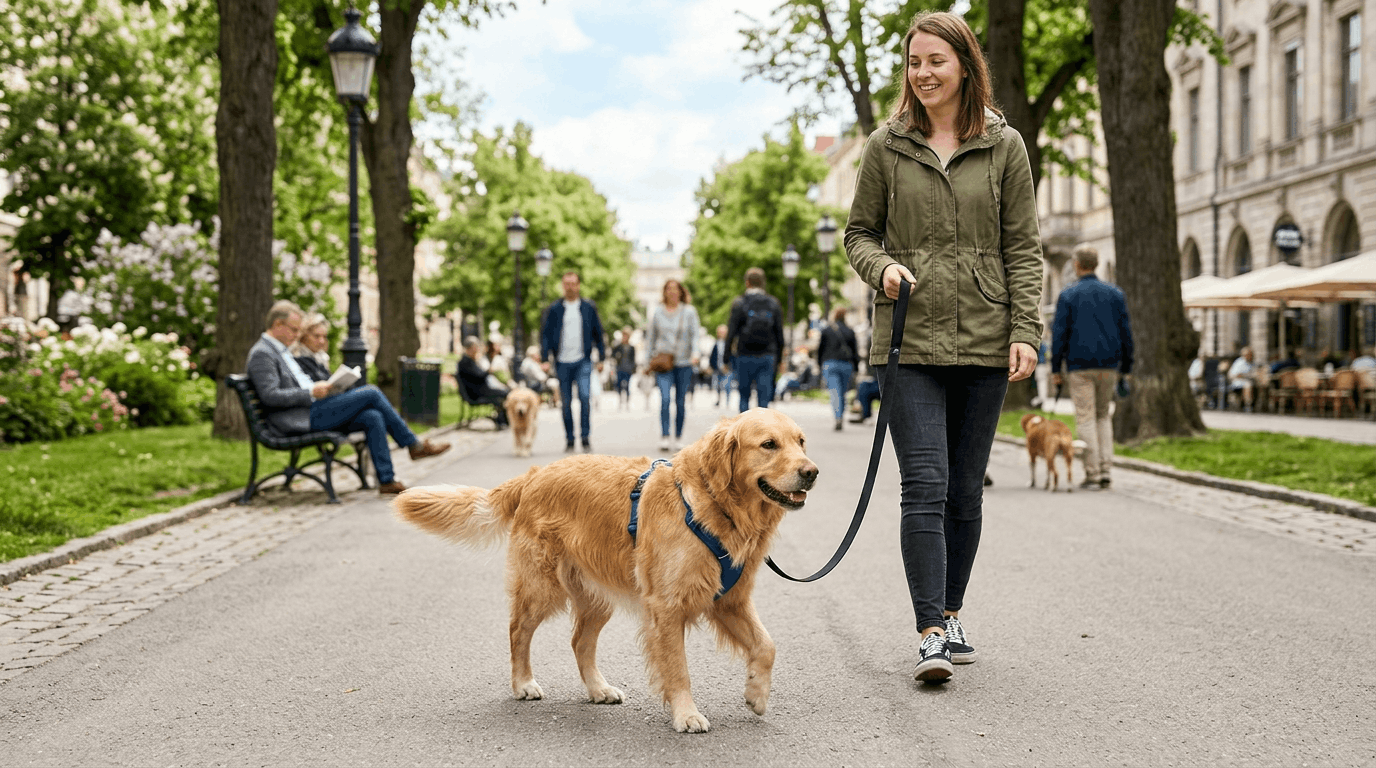
In addition, leash handling should remain relaxed. A tight leash can create tension and signal danger to your dog. Keeping the leash loose while maintaining control helps calm dog in public and encourages more natural movement.
Creating A Safe Focus Point
One effective way to manage distractions is by giving your dog something to focus on. Training your dog to make eye contact with you can redirect attention away from overwhelming stimuli. This technique is especially helpful when trying to calm dog in public.
Using treats or toys as rewards reinforces positive behavior. When your dog chooses to focus on you instead of distractions, reward them immediately. This builds a strong association between calm behavior and positive outcomes.
Over time, your dog learns that staying focused leads to rewards. This method not only helps calm dog in public but also strengthens your bond and communication.
Managing Distance And Exposure
Distance plays a crucial role in managing stress. If your dog becomes overwhelmed, increasing distance from the source of stimulation can help. To calm dog in public, start at a comfortable distance where your dog can observe without reacting.
Gradually reduce this distance as your dog becomes more comfortable. This process, known as desensitization, allows your dog to adjust without feeling threatened. Rushing this step can lead to setbacks, so patience is essential.
In addition, choose quieter times for initial outings. Visiting parks during less crowded hours provides a controlled environment for practice. As your dog improves, you can slowly introduce busier settings to further calm dog in public.
Using Positive Reinforcement Effectively
Positive reinforcement is one of the most powerful tools for behavior training. To calm dog in public, reward calm and relaxed behavior consistently. This encourages your dog to repeat those actions in similar situations.
Timing is important. Rewards should be given immediately after the desired behavior. This helps your dog understand what is being reinforced. Over time, your dog associates calm behavior with positive experiences.
Avoid rewarding anxious or reactive behavior unintentionally. For example, giving attention when your dog is barking may reinforce that behavior. Instead, wait for a calm moment before offering praise or treats. This ensures your efforts to calm dog in public remain effective.
Handling Unexpected Situations
Busy environments can be unpredictable, so it is important to stay prepared. If your dog becomes overwhelmed, remove them from the situation calmly. This prevents stress from escalating and supports your goal to calm dog in public.
Have a plan for quick exits or quiet areas where your dog can relax. These safe spaces provide a break from stimulation and allow your dog to recover. Returning to the environment once your dog is calm helps reinforce positive experiences.
Consistency in handling these situations builds trust. Your dog learns that you will guide them through challenges safely, which makes it easier to calm dog in public over time.
Long Term Training And Patience
Progress takes time, especially in busy environments. To calm dog in public effectively, focus on gradual improvement rather than immediate results. Each positive experience builds confidence and reduces anxiety.
Regular practice is essential. Frequent short outings are more effective than occasional long ones. This approach allows your dog to adapt at a comfortable pace while reinforcing learned behaviors.
Celebrate small victories along the way. Even minor improvements show progress and encourage consistency. With patience and dedication, your ability to calm dog in public will continue to improve.
Conclusion
Helping your dog stay calm in busy outdoor spaces requires understanding, patience, and consistent effort. Learning how to calm dog in public is not about controlling behavior through force but about building trust and confidence. By focusing on preparation, positive reinforcement, and gradual exposure, you create a supportive environment where your dog can thrive.
Although challenges may arise, steady progress leads to lasting results. Over time, your dog will become more comfortable in busy settings and respond calmly to different situations. Ultimately, the ability to calm dog in public enhances your outings and strengthens the bond you share with your dog.
FAQ
- Why does my dog get anxious in crowded places?
Dogs can feel overwhelmed by noise, movement, and unfamiliar environments. - How can I train my dog to focus on me outdoors?
Use treats and consistent commands to encourage attention and reward calm behavior. - What should I do if my dog reacts suddenly?
Stay calm, create distance, and guide your dog to a quieter area. - Is it okay to bring a nervous dog to busy areas?
Yes, but introduce them gradually and monitor their comfort level closely. - How long does it take for a dog to adjust to public spaces?
It varies, but consistent training and exposure lead to steady improvement over time.