
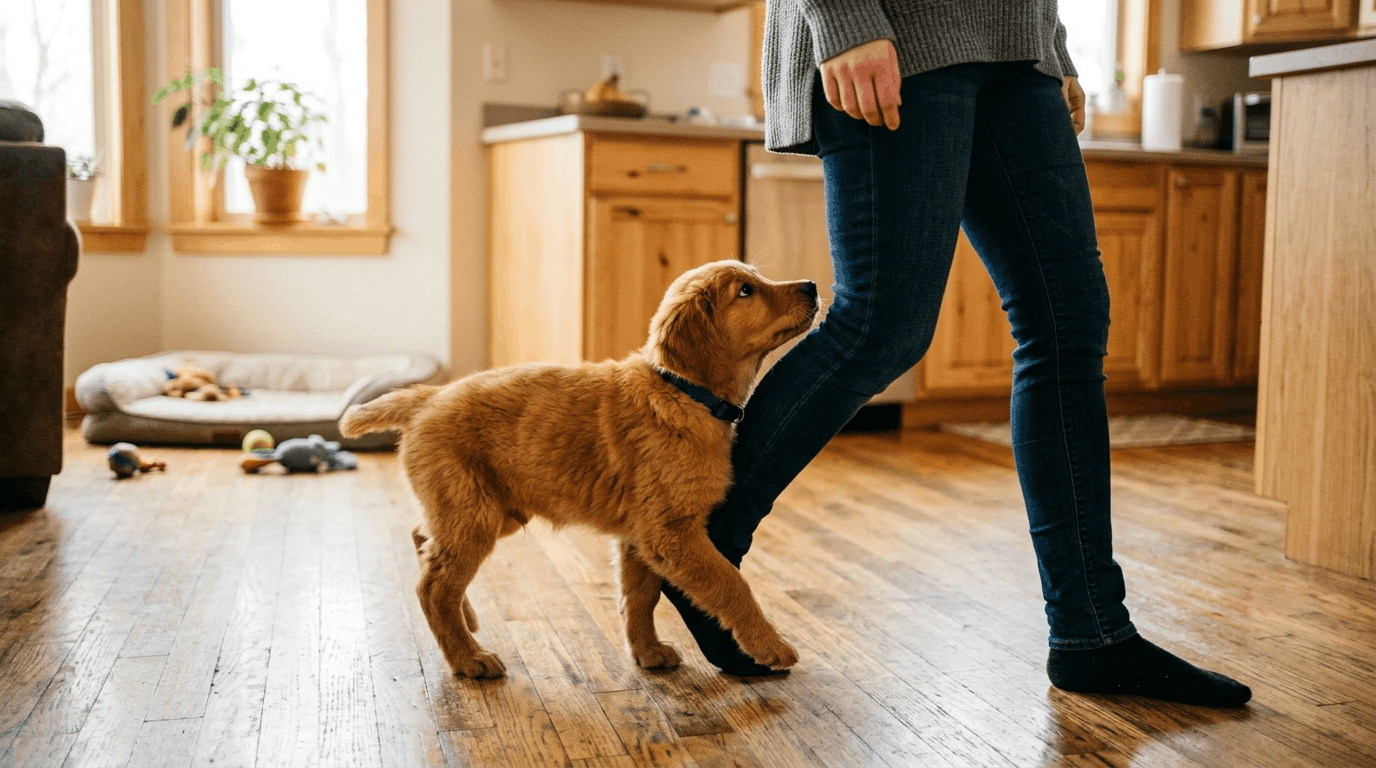
Bringing home a puppy creates excitement, affection, and strong emotional bonding almost immediately. Puppies naturally seek comfort, security, and attention from their owners because they are adjusting to a completely new environment. However, some puppies become overly dependent and struggle to relax unless their owners stay nearby constantly. While attachment is normal during development, excessive dependency can eventually create stress for both the puppy and the owner. Understanding clingy puppy behavior helps owners create healthier emotional balance while building long-term confidence and independence.
Many puppies follow their owners everywhere, cry when left alone, or become anxious whenever attention disappears. Although these behaviors may seem cute initially, they can gradually develop into more serious separation struggles if ignored completely.
Puppies rely heavily on emotional guidance early in life. Consequently, their environment and daily routines strongly influence long-term emotional confidence.
Some puppies become clingy because they feel insecure, while others simply learn that constant attention always rewards dependent behavior.
Fortunately, most puppies can learn healthy independence through calm routines, positive experiences, and consistent emotional support over time.
Owners do not need to ignore affection completely. Instead, they should focus on creating emotional balance so puppies feel safe even when alone temporarily.
Healthy independence ultimately helps puppies become calmer, more confident, and emotionally secure throughout adulthood.
Why Puppies Become Overly Attached
Puppies experience major emotional changes after leaving their littermates and familiar surroundings. New homes often feel exciting yet emotionally overwhelming at the same time.
Clingy puppy behavior commonly develops because puppies seek safety and reassurance while adjusting to unfamiliar routines and environments.
Young puppies naturally depend on social connection for survival and comfort. Consequently, attachment itself is completely normal during early development.
However, excessive dependency sometimes forms when puppies never learn how to feel calm independently.
Constant physical attention, emotional overprotection, or inconsistent routines may accidentally reinforce dependency behaviors repeatedly.
Some puppies also possess naturally sensitive personalities that make emotional adjustment slower and more challenging.
Rescue puppies or dogs separated from litters too early may display even stronger attachment patterns because of early insecurity or disrupted development.
Importantly, clinginess rarely reflects stubbornness or manipulation. Most puppies simply feel uncertain or emotionally overwhelmed when separated from their primary source of safety.
Signs Your Puppy May Be Too Dependent
Many puppies enjoy staying close to their owners. However, excessive emotional reliance often becomes noticeable through repeated anxious behaviors.
Clingy puppy behavior may include following owners constantly from room to room without relaxing independently.
Some puppies cry immediately when owners leave the room, even briefly.
Others refuse to nap alone, panic inside crates, or become distressed during short separations.
Destructive chewing, excessive barking, pacing, scratching doors, or bathroom accidents sometimes appear when emotionally dependent puppies feel isolated.
Certain puppies also struggle settling unless they maintain direct physical contact with their owners continuously.
Importantly, emotionally clingy puppies often appear restless rather than genuinely calm, even when close to their owners.
Recognizing these patterns early helps owners support emotional confidence before dependency strengthens further over time.
How Over-Attention Reinforces Dependency
Many owners unintentionally encourage excessive attachment without realizing it.
Clingy puppy behavior often grows stronger when puppies receive constant attention every time they seek reassurance or contact.
While affection remains important, nonstop engagement may prevent puppies from learning emotional self-soothing skills independently.
For example, immediately responding to every whine or shadowing behavior teaches puppies that emotional discomfort always triggers instant owner attention.
Similarly, carrying puppies constantly or preventing any brief independent experiences may increase emotional reliance gradually.
Owners should still provide love and support while allowing puppies opportunities to relax alone safely and calmly.
Balanced interaction helps puppies understand that temporary independence feels normal rather than emotionally threatening.
Why Confidence Matters for Emotional Independence
Confident puppies usually handle short separations more calmly because they feel emotionally secure overall.
Clingy puppy behavior often improves significantly once puppies build stronger confidence through positive experiences and predictable routines.
Confidence helps puppies recover from uncertainty without panicking or becoming emotionally overwhelmed immediately.
Owners can support confidence by encouraging exploration, problem-solving, and calm independent activities throughout daily life.
Puzzle toys, safe exploration, gentle socialization, and positive training sessions all help puppies feel more emotionally capable.
Importantly, confidence develops gradually through many successful experiences rather than sudden dramatic changes.
Puppies that trust both themselves and their environment generally become calmer and more emotionally balanced over time.
Creating Healthy Separation Habits Early
One of the best ways to prevent emotional dependency involves teaching puppies that short separations feel safe and temporary.
Clingy puppy behavior often decreases when owners practice calm independence exercises consistently during early development.
Owners should begin with very short separations lasting only seconds or minutes initially.
For example, stepping briefly into another room while the puppy enjoys a chew toy teaches calm independence gradually.
Returning calmly without creating emotional excitement also helps normalize separation experiences.
Owners should avoid dramatic departures or emotional greetings because these reactions often increase anticipation and anxiety unnecessarily.
Small consistent exercises build emotional resilience far more effectively than sudden long separations that overwhelm puppies emotionally.
Why Routine Helps Puppies Feel Secure
Predictable routines help puppies understand daily life more clearly while reducing emotional uncertainty significantly.
Clingy puppy behavior frequently improves once puppies develop consistent schedules involving feeding, naps, training, playtime, and quiet rest periods.
Dogs naturally feel calmer when life feels structured and predictable.
Routine helps puppies anticipate what happens next, which reduces anxious attachment and emotional confusion.
Regular quiet time matters especially because some puppies become overstimulated from constant activity or interaction.
Scheduled rest periods encourage puppies to relax independently rather than relying entirely on owner involvement constantly.
Consistent structure supports emotional balance while helping puppies feel safer and more emotionally stable overall.
Teaching Puppies to Relax Alone
Many puppies never naturally learn how to settle independently unless owners intentionally encourage the skill.
Clingy puppy behavior often improves once puppies practice calm relaxation without direct interaction or attention.
Owners can create comfortable resting spaces using soft bedding, safe chew toys, and calming environments away from constant stimulation.
Rewarding calm independent relaxation teaches puppies that quiet alone time produces positive experiences too.
Owners should avoid interrupting every independent rest moment unnecessarily because self-settling remains an important emotional skill.
Background music, enrichment toys, or food puzzles sometimes help puppies relax more comfortably during quiet periods as well.
Gradually increasing independent relaxation time helps puppies build emotional comfort slowly and naturally.
Socialization Supports Emotional Stability
Proper socialization strongly influences emotional development during puppyhood.
Clingy puppy behavior sometimes develops because puppies lack confidence in unfamiliar situations, environments, or experiences.
Positive socialization teaches puppies how to process new stimuli calmly rather than relying entirely on owner reassurance constantly.
Gentle exposure to people, sounds, surfaces, environments, and experiences helps puppies build resilience safely.
Importantly, socialization should remain positive and controlled rather than overwhelming or chaotic.
Fearful experiences during developmental stages may actually increase emotional dependency instead of improving confidence.
Owners should focus on calm successful experiences where puppies feel safe exploring the world gradually.
Avoiding Punishment During Emotional Distress
Some owners become frustrated when puppies cry, bark, or panic during separation exercises. Unfortunately, punishment often increases anxiety instead of teaching emotional independence successfully.
Clingy puppy behavior reflects emotional insecurity rather than deliberate disobedience.
Harsh corrections may damage trust while making puppies feel even less emotionally safe during separation.
Instead, owners should focus on gradual exposure, calm reassurance, and positive reinforcement for relaxed independent behavior.
Emotional growth requires patience because puppies learn self-confidence gradually over time.
Calm supportive handling creates much healthier emotional learning experiences overall.
Mental Stimulation Reduces Emotional Dependence
Puppies with unspent mental energy often struggle relaxing independently because their minds remain overstimulated and restless.
Clingy puppy behavior sometimes improves significantly through better mental enrichment and structured activities.
Training sessions, puzzle feeders, scent games, chew toys, and problem-solving exercises help puppies feel mentally fulfilled.
Mental stimulation encourages emotional balance while reducing boredom-driven attachment behaviors naturally.
Importantly, puppies do not need nonstop physical activity alone. Balanced mental engagement often tires puppies more effectively while promoting calmer emotional states.
A mentally satisfied puppy usually settles more comfortably during quiet independent periods throughout the day.
How Crate Training Builds Confidence
When introduced properly, crate training can support emotional independence and security greatly.
Clingy puppy behavior often improves once puppies view crates as calm safe resting spaces rather than emotional isolation.
Crates should never feel like punishment. Instead, owners should create positive associations using treats, toys, meals, and relaxation opportunities.
Short calm crate sessions help puppies practice independence gradually without feeling abandoned or unsafe.
Many puppies eventually learn to relax more deeply inside crates because the enclosed environment feels predictable and secure emotionally.
Patience remains essential during crate training because forcing long confinement too quickly may increase anxiety instead of reducing it.
Helping Puppies Through Alone Time Gradually
Puppies cannot suddenly handle long hours alone without preparation. Emotional independence develops slowly through many repeated successful experiences.
Clingy puppy behavior usually improves most effectively when owners increase separation time gradually and realistically.
Short successful alone periods matter far more than overwhelming puppies emotionally with excessive isolation too quickly.
Owners should observe emotional thresholds carefully while avoiding situations that repeatedly trigger panic or distress.
Confidence-building works best when puppies experience manageable challenges paired with positive emotional outcomes consistently.
Over time, puppies learn that owners always return and temporary separation feels safe rather than threatening.
Building Long-Term Emotional Confidence
Emotional independence does not mean teaching puppies to avoid affection or connection entirely. Instead, healthy confidence allows puppies to feel calm both with and without constant owner interaction.
Clingy puppy behavior improves gradually when owners balance affection with opportunities for independence and emotional growth.
Calm routines, positive reinforcement, mental stimulation, socialization, and supportive training all contribute to healthier emotional development.
Importantly, owners should remain patient throughout the process because emotional maturity develops slowly during puppyhood.
Some puppies naturally progress faster than others depending on personality, breed tendencies, and previous experiences.
Consistent calm guidance usually creates far better results than frustration or harsh correction ever can.
Ultimately, emotionally secure puppies become more adaptable, confident, and relaxed throughout adulthood.
By encouraging healthy independence early, owners help puppies build resilience that supports calmer behavior and stronger emotional balance for years to come.
FAQ
1. Is it normal for puppies to follow owners everywhere?
Yes. Young puppies naturally seek comfort and security during early development stages.
2. Can clingy behavior lead to separation anxiety?
Yes. Excessive emotional dependency may gradually increase separation-related stress over time.
3. Should I ignore my puppy when it cries?
Calm gradual independence training works better than completely ignoring emotional distress suddenly.
4. How long does it take puppies to become more independent?
Progress varies depending on age, personality, routine consistency, and emotional confidence.
5. Do certain breeds become clingier than others?
Yes. Some breeds naturally form stronger attachment bonds and require extra independence training.