
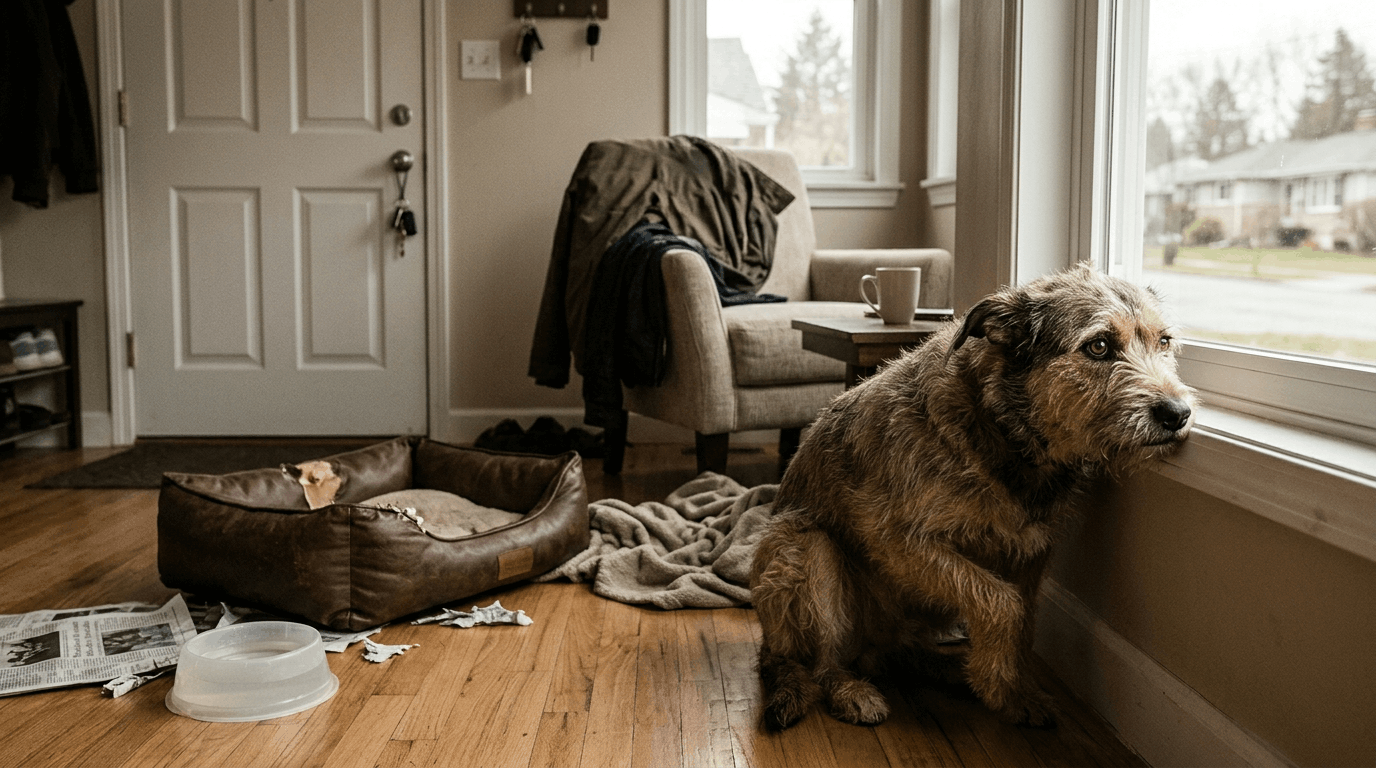
Dogs naturally form strong emotional bonds with their owners. Most dogs enjoy companionship and feel happiest when surrounded by familiar people. However, some dogs struggle emotionally when left alone and experience far more than simple loneliness. Severe separation anxiety can create overwhelming fear, panic, emotional distress, and destructive behavior that affects both the dog and the household significantly. Understanding the warning signs early helps owners provide support before the problem becomes worse.
Many people misunderstand anxious behavior and assume the dog is simply disobedient, stubborn, or overly energetic.
In reality, separation-related stress often comes from panic rather than intentional bad behavior.
Dogs experiencing emotional distress may bark excessively, destroy furniture, pace constantly, or attempt escape behaviors because they feel unsafe alone.
Importantly, anxiety does not improve through punishment or frustration.
Dogs need emotional support, gradual confidence-building, and structured routines that help them feel secure independently.
With patience and proper guidance, many dogs improve dramatically over time.
Recognizing emotional triggers and understanding canine stress responses remain essential for long-term progress.
Why Dogs Develop Separation Anxiety
Many different factors contribute to emotional dependence and separation-related stress.
Severe separation anxiety sometimes develops after major life changes such as moving homes, changes in routine, loss of a companion, or adoption from shelters.
Some dogs naturally possess more sensitive temperaments and therefore struggle more with emotional independence.
Dogs that rarely spend time alone may also develop unhealthy attachment patterns over time.
Additionally, traumatic experiences sometimes increase emotional insecurity and fear responses significantly.
Importantly, separation anxiety does not mean owners caused the problem intentionally.
Most affected dogs simply struggle processing isolation calmly because their emotional systems react strongly to separation itself.
Understanding the root cause helps owners respond with more patience and realistic expectations.
Common Signs of Emotional Distress
Dogs experiencing emotional panic often display very noticeable behaviors shortly after owners leave the home.
Severe separation anxiety commonly causes nonstop barking, whining, howling, pacing, or scratching at doors and windows.
Some dogs destroy furniture, chew walls, tear curtains, or damage crates while attempting escape.
Others urinate or defecate indoors despite being fully house-trained otherwise.
Importantly, these behaviors usually happen specifically during separation rather than throughout the day generally.
Many anxious dogs also display intense excitement whenever owners return home because emotional relief feels overwhelming after prolonged stress.
Physical signs such as heavy panting, drooling, trembling, or refusal to eat may also appear during anxious episodes.
Why Punishment Makes Anxiety Worse
Many frustrated owners mistakenly punish dogs after discovering destruction or accidents inside the home.
Severe separation anxiety cannot improve through punishment because fear drives the behavior rather than defiance.
Dogs usually connect punishment only to the owner returning home, not to the earlier anxious behavior itself.
As a result, punishment often increases emotional stress and insecurity even further.
Fearful dogs need emotional stability, calm guidance, and confidence-building instead of intimidation or harsh correction.
Owners should focus on prevention, management, and gradual emotional improvement rather than reacting emotionally afterward.
Supportive training methods create healthier long-term progress while protecting trust between dog and owner.
Recognizing Early Warning Signs
Some dogs display subtle emotional distress before anxiety becomes severe.
Severe separation anxiety often develops gradually through smaller warning signs initially.
For example, dogs may follow owners constantly around the house or become visibly stressed whenever departure routines begin.
Picking up keys, putting on shoes, or reaching for bags sometimes triggers immediate nervous behavior.
Dogs may pant, whine, pace, or shadow owners intensely before departures occur.
Early recognition allows owners to intervene before emotional panic patterns strengthen over time.
Small behavioral changes therefore deserve attention rather than dismissal.
How Routine Helps Reduce Anxiety
Predictable routines create emotional stability that anxious dogs rely on heavily.
Severe separation anxiety often improves when daily schedules become calmer and more structured consistently.
Regular feeding times, walks, training sessions, and rest periods help dogs feel safer because life becomes more predictable.
Dogs that understand daily patterns often cope with temporary separation more calmly.
Structured routines also reduce uncertainty, which commonly increases emotional stress in anxious dogs.
Importantly, routines should remain balanced rather than overly rigid.
Calm consistency supports emotional security while helping dogs learn healthier coping habits gradually.
Teaching Dogs Independence Slowly
Emotionally dependent dogs often need help learning how to relax independently inside the home.
Severe separation anxiety improves more effectively through gradual confidence-building rather than sudden forced isolation.
Owners should encourage calm independent behavior during normal daily routines.
For example, dogs can learn to rest comfortably on their beds while owners move throughout the house briefly.
Short calm separations practiced repeatedly help dogs understand that temporary absence does not mean abandonment or danger.
Importantly, progress usually happens slowly and requires patience.
Small successful experiences build emotional resilience far more effectively than overwhelming dogs with long stressful absences.
Mental Stimulation Reduces Stress
Mental enrichment plays a major role in emotional wellness and behavioral balance.
Severe separation anxiety sometimes becomes worse when dogs feel mentally under-stimulated or emotionally frustrated daily.
Puzzle feeders, scent games, obedience training, chew toys, and problem-solving activities help reduce nervous energy naturally.
Mental stimulation also encourages healthier emotional focus while supporting calmer thinking patterns.
Dogs that receive enrichment regularly often settle more comfortably because their emotional needs receive healthier fulfillment.
Calm mentally engaged dogs usually handle short periods alone more successfully than bored or overstimulated dogs.
Exercise Supports Emotional Regulation
Physical activity strongly influences emotional health and stress levels.
Severe separation anxiety often feels more intense in dogs carrying excess physical energy or frustration.
Structured walks, play sessions, scent exploration, and balanced exercise routines help release nervous energy naturally.
Importantly, exercise should remain calm and structured rather than overly stimulating.
Over-arousal sometimes increases emotional instability instead of improving calmness.
Balanced movement combined with mental enrichment creates healthier emotional outcomes overall.
Many dogs settle more comfortably after exercise because physical activity supports emotional regulation naturally.
Creating Safe Spaces Inside the Home
Anxious dogs benefit greatly from having comfortable secure areas where they can relax calmly.
Severe separation anxiety sometimes improves when dogs associate specific resting spaces with safety and relaxation.
Soft bedding, calming music, chew toys, or quiet rooms help create emotionally soothing environments.
Some dogs feel safer inside properly introduced crates, while others prefer open resting areas.
Importantly, safe spaces should never feel like punishment.
Dogs should willingly associate these areas with calm positive experiences rather than forced isolation.
Comfortable environments support healthier nervous system regulation during alone time.
Why Departure Routines Matter
Dogs often become anxious before owners even leave the home.
Severe separation anxiety frequently intensifies because dogs associate specific departure cues with emotional panic.
Keys, shoes, coats, handbags, or certain routines may trigger visible stress immediately.
Owners can reduce emotional sensitivity by practicing these actions casually throughout the day without actually leaving.
Repeated neutral exposure helps reduce emotional reactions gradually over time.
Additionally, calm quiet departures often work better than emotional lengthy goodbyes.
Low-key exits help prevent unnecessary emotional escalation before separation begins.
Avoiding Emotional Overdependence
Strong bonds remain healthy, but excessive emotional dependence may increase anxiety significantly.
Severe separation anxiety sometimes develops when dogs rely completely on constant interaction for emotional comfort.
Owners should therefore encourage healthy independence naturally throughout daily life.
Dogs benefit from learning how to relax calmly without nonstop attention or physical contact.
Independent play, quiet rest periods, and calm self-settling behavior all support emotional resilience gradually.
Balanced relationships help dogs feel emotionally secure while reducing panic during temporary separation.
Using Positive Reinforcement Effectively
Positive reinforcement helps anxious dogs associate calm behavior with rewarding outcomes.
Severe separation anxiety training should focus heavily on rewarding emotional relaxation and independent behavior consistently.
Treats, praise, enrichment toys, or calm affection all reinforce healthier emotional habits naturally.
Owners should reward calm moments before anxiety escalates fully whenever possible.
Importantly, progress often appears gradually through smaller improvements such as calmer departures, reduced pacing, or shorter barking episodes.
Celebrating small successes helps maintain realistic expectations throughout the training process.
When Professional Help May Be Necessary
Some dogs experience emotional distress severe enough to require professional behavioral support.
Severe separation anxiety occasionally causes self-injury, nonstop panic, or dangerous escape attempts that exceed normal training challenges.
Certified trainers or veterinary behaviorists can provide customized guidance for more serious cases.
In some situations, veterinarians may recommend temporary medication alongside behavior modification plans.
Professional support helps owners understand emotional triggers while creating safer structured recovery strategies.
Importantly, seeking help does not mean failure.
Many dogs improve significantly once proper emotional support and individualized plans become available.
Helping Dogs Feel Secure Again
Dogs experiencing emotional panic need patience, structure, and compassionate guidance throughout recovery.
Severe separation anxiety rarely disappears overnight because emotional habits and fear responses develop gradually over time.
Owners should focus on consistent progress rather than expecting instant perfection.
Calm routines, independence training, enrichment, exercise, and emotional stability all contribute positively to long-term improvement.
Importantly, emotionally supportive relationships help dogs rebuild confidence and resilience safely.
Dogs that feel secure and understood often recover more effectively because trust reduces emotional stress significantly.
Every small improvement matters during the healing process.
Even calmer departures, shorter barking episodes, or improved relaxation represent meaningful progress.
Ultimately, separation anxiety involves emotional fear rather than stubbornness or bad intentions.
When owners approach the problem with patience and understanding, many dogs learn how to feel calmer, safer, and more emotionally balanced while home alone.
FAQ
1. What causes panic when dogs are left alone?
Fear, emotional dependence, routine changes, and past trauma commonly contribute to anxiety.
2. Can dogs outgrow separation problems naturally?
Some improve slightly with maturity, but structured training usually remains necessary for lasting progress.
3. Should I crate my anxious dog?
Some dogs feel safer in crates, while others become more stressed. Individual comfort matters most.
4. How long does recovery usually take?
Progress varies greatly depending on severity, consistency, and the dog’s emotional sensitivity.
5. Can exercise reduce emotional stress in dogs?
Yes. Balanced physical activity often helps dogs regulate nervous energy and relax more comfortably.