Walking your dog should feel relaxing, yet for many owners it quickly becomes stressful when barking, lunging, or pulling takes over. This is where leash reactivity training becomes essential, because it helps you understand the behavior and build calm, focused responses over time. Instead of reacting emotionally, your dog can learn to stay grounded and connected to you, even in busy environments. With the right approach, you can shift your daily walks from chaotic struggles into enjoyable routines that strengthen your bond.
At first, leash reactivity may seem like stubbornness or disobedience. However, it often comes from excitement, fear, or frustration. Because the leash limits your dog’s movement, those emotions can intensify quickly. As a result, proper leash reactivity training focuses not just on stopping behavior, but on changing how your dog feels in those moments. When you address both the emotional and behavioral sides, real progress begins to show.
Understanding Why Reactivity Happens
Before you can fix the issue, it helps to understand what drives it. Many dogs react on leash because they feel trapped or overwhelmed. While off-leash they may greet calmly, the restriction of a leash can create tension that builds into barking or lunging. Therefore, leash reactivity training always starts with awareness rather than correction.
Some dogs react out of excitement when they see another dog. Others react because they feel threatened or unsure. In both cases, the reaction is a coping mechanism. Instead of labeling it as bad behavior, you can view it as communication. This shift in mindset changes how you approach leash reactivity training and makes your methods more effective.
Consistency also plays a major role. If your dog sometimes pulls toward triggers and sometimes gets corrected, confusion grows. That is why clear structure is critical. When your dog understands what is expected every time, calm behavior becomes easier to repeat.
Building Calm Behavior From the Start
A strong foundation makes all the difference. Before facing real distractions, your dog needs to understand how to stay calm and focused on you. This is where leash reactivity training becomes proactive rather than reactive.
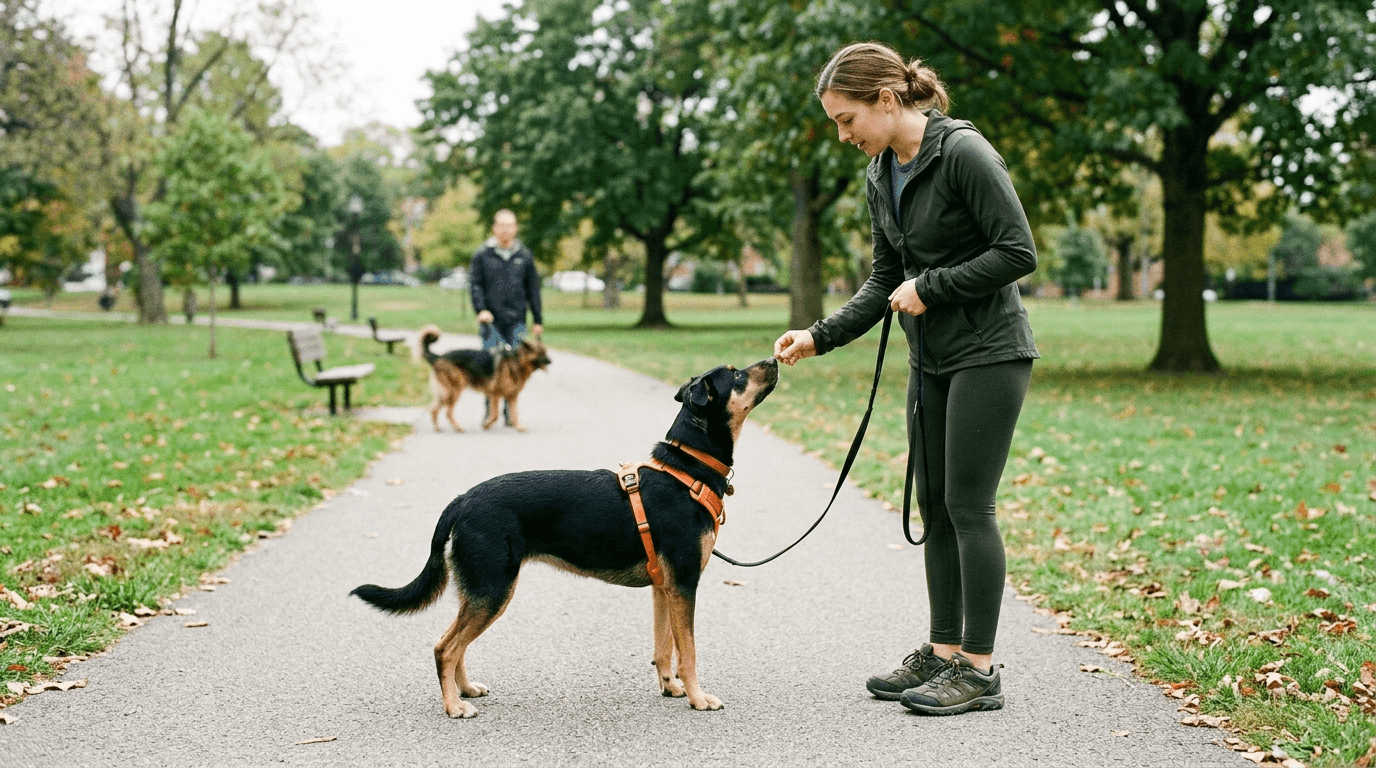
Start in a quiet environment where your dog can succeed. Practice walking with a loose leash and reward calm behavior. When your dog checks in with you naturally, reinforce that moment. Over time, this builds a habit of looking to you instead of reacting outward.
Additionally, timing matters. Rewarding calm behavior before a reaction happens teaches your dog what works. Waiting until after a reaction often sends mixed signals. As you continue leash reactivity training, these small, well-timed rewards create lasting changes.
Patience is essential during this stage. While progress may feel slow at first, each calm moment adds up. Eventually, those moments connect into longer periods of controlled behavior.
Managing Distance and Triggers
One of the most effective strategies in leash reactivity training is managing distance. If your dog reacts strongly when another dog is close, you need to create enough space for them to stay calm. This distance is often called the threshold.
When your dog stays below their threshold, they can think clearly and respond to your cues. However, once they cross it, reactions take over. Therefore, adjusting your distance allows you to work within your dog’s comfort zone.
For example, if your dog reacts at ten feet, begin working at twenty feet. Gradually reduce the distance as your dog improves. This step-by-step approach makes leash reactivity training more controlled and less overwhelming.
You also need to stay aware of your surroundings. Spotting triggers early gives you time to respond calmly. Turning away or creating space is not avoidance; it is a smart training decision. Over time, your dog learns that they do not need to react because you are guiding the situation.
Teaching Focus and Engagement
Engagement is the key to success. When your dog focuses on you, outside distractions lose their intensity. This is why leash reactivity training often emphasizes connection over correction.
Simple exercises can build this focus. For instance, rewarding eye contact encourages your dog to check in regularly. Using a consistent cue can also help redirect attention when needed. As your dog learns to engage with you, reactions begin to fade.
You should also vary your rewards to keep motivation high. Sometimes use treats, while other times use praise or movement. This keeps your dog interested and reinforces positive behavior in different ways.
Over time, engagement becomes a habit. Instead of scanning for triggers, your dog naturally looks to you for guidance. This shift is one of the most powerful outcomes of effective leash reactivity training.
Handling Reactions Without Escalation
Even with consistent work, reactions will still happen. What matters most is how you respond in those moments. If you react with tension or frustration, your dog may escalate further. Therefore, leash reactivity training includes learning how to stay calm under pressure.
When your dog reacts, avoid pulling or shouting. Instead, create distance and reset the situation. Turning away calmly helps your dog disengage without adding stress. Once your dog settles, you can resume training.
It is important not to punish reactions harshly. While it may stop the behavior temporarily, it often increases fear or anxiety. Instead, focus on guiding your dog back to a calm state. This approach builds trust and supports long-term progress.
Each reaction becomes a learning opportunity. By handling it correctly, you reinforce calm recovery rather than reinforcing stress.
Creating Structured Walks That Build Confidence
Structure brings clarity, and clarity reduces anxiety. Dogs thrive when they know what to expect. That is why structured walks play a central role in leash reactivity training.
Start your walk with a calm mindset. If your dog begins in an excited state, reactivity is more likely. Waiting for calm behavior before stepping outside sets the tone for the entire walk.
During the walk, maintain a steady pace and clear direction. Avoid letting your dog pull or zigzag constantly. Instead, guide them with consistent movement and gentle redirection. This creates a sense of stability that reduces reactive behavior.
Routine also matters. Walking at similar times and practicing familiar routes can help your dog feel more secure. As confidence grows, you can gradually introduce new environments without overwhelming them.
Using Positive Reinforcement Effectively
Positive reinforcement is the foundation of modern leash reactivity training. When you reward the behavior you want, your dog is more likely to repeat it. However, the key lies in using rewards correctly.
Timing must be precise. Rewarding too late can confuse your dog about what earned the reward. Instead, mark the exact moment of calm behavior. This clarity accelerates learning.
Consistency is equally important. If you reward calm behavior sometimes but ignore it other times, progress slows. By reinforcing the same behavior repeatedly, you create strong patterns.
Gradually, you can reduce the frequency of rewards while maintaining the behavior. This transition helps your dog stay calm even without constant reinforcement. Over time, calm walking becomes the default response.
Progressing at the Right Pace
Every dog learns at a different speed. Some improve quickly, while others need more time. That is why leash reactivity training must adapt to your dog’s individual pace.
Rushing the process often leads to setbacks. If you move too close to triggers too soon, reactions will return. Instead, progress gradually and celebrate small wins along the way.
Set realistic goals for each session. For example, aim for a few calm passes rather than expecting perfection. These achievable goals keep both you and your dog motivated.
Tracking progress can also help. Noticing improvements, even small ones, reinforces your commitment. Over time, these improvements build into lasting change.
Strengthening Your Role as a Calm Leader
Your energy influences your dog more than you might realize. Dogs are highly sensitive to tension, and they often mirror your emotions. Therefore, leash reactivity training involves working on your own mindset as well.
Approach each walk with calm confidence. Even if challenges arise, maintaining a steady attitude helps your dog feel secure. This sense of leadership reduces uncertainty and lowers the chance of reactions.
Clear communication also strengthens your role. Use consistent cues and body language to guide your dog. When your signals are predictable, your dog responds more reliably.
Building this leadership does not mean being strict or dominant. Instead, it means being consistent, calm, and supportive. This balance creates trust, which is essential for long-term success.
Long-Term Results and Maintenance
As your dog improves, maintaining progress becomes the next goal. Leash reactivity training is not a one-time fix, but an ongoing process that evolves with your dog.
Continue practicing in different environments to reinforce calm behavior. Exposure to new situations helps your dog generalize their training. This ensures that progress holds up in real-world scenarios.
You should also stay consistent with your routines. Even after improvement, clear structure and expectations keep your dog grounded. Without consistency, old habits can return over time.
Celebrate your progress along the way. Calm walks that once seemed impossible can become your new normal. With patience and dedication, leash reactivity training leads to lasting change.
Conclusion: Turning Stressful Walks Into Calm Experiences
Leash reactivity can feel overwhelming, but it is not a permanent problem. With the right approach, you can guide your dog toward calm, confident behavior. Leash reactivity training works best when it focuses on understanding, patience, and consistent practice rather than quick fixes.
As you apply these strategies, you will notice small improvements that build over time. Your dog will begin to look to you for guidance instead of reacting to every trigger. Eventually, walks become smoother, more enjoyable, and far less stressful.
By staying committed and adjusting your approach as needed, you create a positive experience for both you and your dog. In the end, leash reactivity training is not just about control, but about building trust, confidence, and a stronger bond that lasts well beyond the walk.
FAQ
1. What causes dogs to react aggressively on a leash?
Dogs often react due to fear, frustration, or excitement. The leash restricts movement, which can intensify these emotions and lead to barking or lunging.
2. How long does it take to improve leash behavior?
Progress varies depending on the dog, but consistent practice usually shows noticeable improvement within a few weeks to a few months.
3. Can older dogs still learn to stay calm on walks?
Yes, older dogs can learn new behaviors. With patience and consistency, they can develop calmer responses just like younger dogs.
4. Should I avoid other dogs during training?
At first, creating distance helps your dog stay calm. Gradually reintroducing controlled exposure improves their ability to handle triggers.
5. What tools help with managing pulling and reactions?
Well-fitted harnesses, standard leashes, and proper training techniques are more effective than relying on corrective tools alone.