
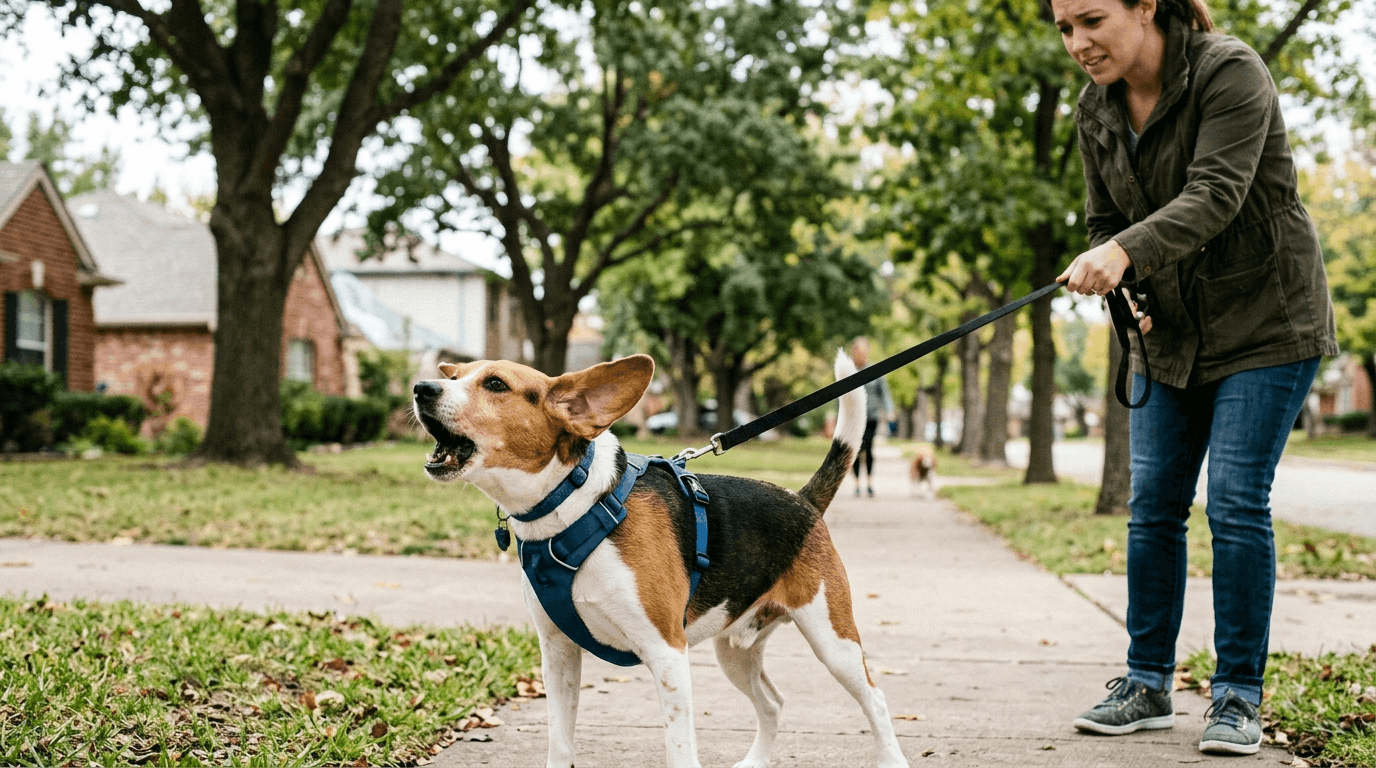
Walking your dog should feel calm and enjoyable, yet constant barking can quickly turn it into a stressful experience. Many owners struggle with this issue, especially when their dog reacts to people, other dogs, or even random noises. Learning how to stop dog barking walks is not about forcing silence but about helping your dog feel more relaxed and focused in outdoor environments. Once you understand what triggers the behavior, you can begin to guide your dog toward better responses.
Dogs bark during walks for several reasons, including excitement, fear, frustration, or overstimulation. Because of this, barking is often a communication tool rather than a problem on its own. Therefore, instead of correcting the noise directly, it is more effective to address the underlying emotion. When you approach training this way, your efforts to stop dog barking walks become more successful and long-lasting.
Why Dogs Bark At Everything On Walks
Understanding the cause of barking is the first step toward improving behavior. Some dogs bark because they feel threatened, while others simply get overly excited. In both cases, the reaction comes from an emotional response rather than intentional disobedience. As a result, your goal is to reduce that emotional intensity over time.
For example, a dog that barks at other dogs may feel unsure or overwhelmed. Meanwhile, a dog that barks at passing cars might be reacting to movement and noise. Because each trigger is different, the strategy to stop dog barking walks must be flexible and adapted to your dog’s specific needs.
Another important factor is your dog’s energy level. A dog with excess energy is more likely to react quickly to stimuli. Therefore, managing physical and mental stimulation before walks can significantly reduce barking behavior.
Building Calm Behavior Before The Walk
Training does not begin outside; it starts at home. If your dog is already excited before leaving, that energy will carry into the walk. Consequently, creating a calm routine before heading out helps set the tone for better behavior.
Start by encouraging your dog to sit and wait before putting on the leash. If your dog becomes too excited, pause and wait for calmness before continuing. This teaches your dog that relaxed behavior leads to progress. Over time, this simple routine becomes a powerful tool to stop dog barking walks before they even begin.
In addition, practicing short obedience exercises indoors can improve focus. Commands like sit, stay, and look help your dog stay engaged with you instead of reacting to every distraction outside.
Using Distance To Reduce Triggers
One of the most effective techniques is managing distance. When your dog reacts, it is often because the trigger is too close. By increasing distance, you reduce the intensity of the situation and give your dog a chance to stay calm.
For instance, if your dog barks at other dogs, try crossing the street or moving to a quieter area. This creates space for your dog to observe without feeling overwhelmed. As your dog becomes more comfortable, you can gradually decrease the distance.
This approach is essential when working to stop dog barking walks because it prevents your dog from practicing the unwanted behavior repeatedly. Instead, it creates opportunities for calm responses.
Redirecting Your Dog’s Focus
Redirection is another powerful strategy that shifts your dog’s attention away from triggers. When your dog notices something that would normally cause barking, immediately engage them with a command or reward.
For example, you can ask your dog to look at you or follow a simple cue. Then, reward calm behavior with a treat or praise. Over time, your dog learns to check in with you instead of reacting.
Consistency is key here. Every successful redirection reinforces positive behavior. As a result, your efforts to stop dog barking walks become more effective with each outing.
Positive Reinforcement For Calm Responses
Rewarding calm behavior is one of the most reliable training methods. Instead of focusing on stopping barking, you focus on reinforcing the behavior you want to see. This creates a clear and positive learning experience for your dog.
Whenever your dog stays quiet around a trigger, offer a reward immediately. This could be a treat, verbal praise, or even a quick play session. Over time, your dog begins to associate calmness with positive outcomes.
Using positive reinforcement not only helps stop dog barking walks but also strengthens your bond. Your dog learns to trust you as a guide rather than reacting out of fear or excitement.
Managing Leash Tension And Body Language
Many owners unknowingly contribute to barking through leash tension. When you tighten the leash, your dog may interpret it as a signal that something is wrong. This increases anxiety and can trigger barking.
Instead, keep the leash loose and maintain a relaxed posture. Your body language communicates more than you might realize. When you stay calm, your dog is more likely to follow your lead.
Additionally, avoid pulling your dog away abruptly. Instead, guide them gently and redirect their focus. This approach supports your goal to stop dog barking walks without creating additional stress.
Consistency And Patience Matter Most
Training takes time, and progress will not happen overnight. Some days will feel easier than others, which is completely normal. The key is to remain consistent with your approach and avoid rushing the process.
If your dog has a setback, simply return to a step where they felt comfortable. Gradual improvement is more effective than pushing too fast. As you continue working to stop dog barking walks, small wins will build into lasting results.
It is also important to keep training sessions positive. If you feel frustrated, take a break and try again later. Your mindset directly affects your dog’s response, so staying calm is essential.
Creating A Better Walking Experience
Improving your dog’s behavior on walks transforms your daily routine into something enjoyable. As your dog becomes calmer, you can explore new environments and spend more quality time together.
Incorporating mental stimulation during walks can also help. Simple activities like changing routes, practicing commands, or allowing controlled sniffing keep your dog engaged and less reactive.
When combined with consistent training, these strategies make it easier to stop dog barking walks while creating a balanced and fulfilling experience for your dog.
Conclusion
Helping your dog stay calm on walks requires understanding, patience, and the right techniques. By focusing on emotional triggers, building routines, and reinforcing calm behavior, you can successfully stop dog barking walks over time. Although progress may feel slow at first, consistency leads to lasting change.
Ultimately, the goal is not just to reduce barking but to create a more relaxed and confident dog. With the right approach, your walks can become peaceful, enjoyable moments that strengthen your bond and improve your dog’s overall well-being.
FAQ
- Why does my dog bark at everything during walks?
Dogs often bark due to excitement, fear, or overstimulation, especially when they are unsure how to respond to triggers. - How long does it take to improve barking behavior outside?
Progress varies, but consistent training usually leads to noticeable improvements within a few weeks. - Should I punish my dog for barking on walks?
No, punishment can increase anxiety and worsen behavior. Positive reinforcement works much better. - Can training at home help reduce barking outside?
Yes, building focus and calm behavior indoors creates a strong foundation for better behavior during walks. - What is the best way to handle sudden barking triggers?
Increase distance from the trigger and redirect your dog’s attention to help them stay calm.