
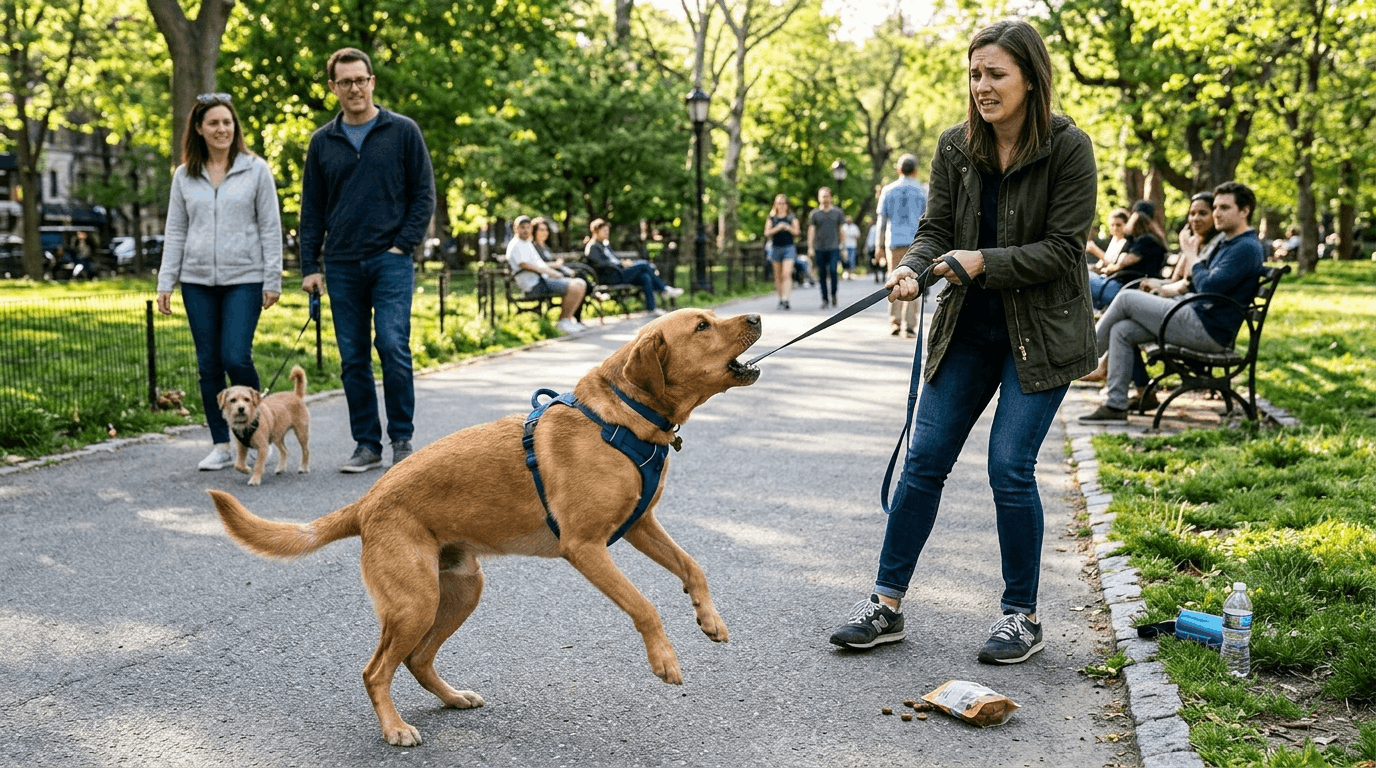
If your dog misbehaves outside, you are not alone. Many pet owners feel confident at home, yet the moment they step outdoors, everything seems to fall apart. Commands are ignored, pulling begins, barking increases, and suddenly your calm dog turns into a completely different animal. While this can feel frustrating, it is actually very common and, more importantly, very fixable with the right approach.
The outdoor environment is full of distractions, and dogs process these stimuli much differently than humans. Therefore, understanding why a dog misbehaves outside is the first step toward solving the problem. Once you recognize the root cause, you can begin to guide your dog toward calmer, more controlled behavior in any environment.
Why Dogs Act Differently Outdoors
Inside your home, your dog feels safe and familiar with the surroundings. There are fewer distractions, and routines are predictable. However, outside is a completely different world. New smells, moving objects, unfamiliar sounds, and other animals all compete for your dog’s attention. As a result, your dog misbehaves outside because their brain is overwhelmed with stimulation.
Additionally, many dogs have not been properly trained to generalize commands. Just because your dog sits perfectly in the living room does not mean they understand the command applies in a busy park. This gap in understanding often leads to confusion, which can look like disobedience.
Moreover, emotional responses also play a major role. Some dogs feel excitement when they go outside, while others experience anxiety or fear. Both emotions can cause a dog to misbehave outside, even if they are well-behaved indoors.
Overstimulation Is The Most Common Trigger
One of the biggest reasons a dog misbehaves outside is overstimulation. When your dog steps into an environment filled with sights, sounds, and smells, their senses go into overdrive. Consequently, they may ignore commands simply because they are too distracted.
For example, passing cars, other dogs, and even people walking by can trigger excitement or curiosity. In this state, your dog is not being stubborn. Instead, their focus is pulled in multiple directions at once.
To manage this, you should start by reducing exposure to overwhelming environments. Begin training in quieter outdoor spaces, such as a backyard or a calm street. Gradually, as your dog improves, you can introduce more distractions in a controlled way. This step-by-step process helps your dog learn how to stay calm, even when stimulation increases.
Lack Of Proper Leash Training
Another reason your dog misbehaves outside is poor leash training. Many owners unintentionally allow bad habits to develop, such as pulling or lunging. Over time, these behaviors become reinforced because the dog gets what they want, which is movement forward.
When a dog pulls on the leash and reaches something interesting, they learn that pulling works. Therefore, they repeat the behavior again and again. This creates a cycle that becomes harder to break.
To fix this, you must teach your dog that pulling does not lead to rewards. Stop walking when the leash becomes tight, and only move forward when it is loose. While this may feel slow at first, consistency is key. Eventually, your dog will understand that calm walking gets them where they want to go.
Excitement And Energy Levels
In many cases, a dog misbehaves outside simply because they have too much energy. Dogs that do not get enough physical or mental stimulation indoors often release that pent-up energy during walks.
This can show up as jumping, barking, or excessive pulling. While it may look like bad behavior, it is often just an outlet for energy.
To address this, try giving your dog exercise before heading outside. A short play session or basic training routine can help reduce excess energy. As a result, your dog will be more focused and easier to manage during walks.
Fear And Anxiety In Outdoor Environments
Not all dogs misbehave outside due to excitement. Some act out because they feel nervous or scared. Loud noises, unfamiliar places, and new experiences can trigger anxiety, especially in sensitive dogs.
When a dog feels threatened, they may bark, lunge, or try to escape. These behaviors are often misunderstood as aggression, but they are usually fear-based responses.
To help an anxious dog, you should move at their pace. Avoid forcing them into overwhelming situations. Instead, gradually expose them to new environments while providing reassurance and rewards. Over time, this builds confidence and reduces fear-driven behavior.
Inconsistent Commands And Training
Consistency plays a huge role in behavior. If your commands are unclear or used inconsistently, your dog may not understand what you expect. This confusion often leads to situations where a dog misbehaves outside, even if they seem trained.
For instance, if you sometimes allow pulling and other times correct it, your dog receives mixed signals. As a result, they will continue testing boundaries.
To improve this, use clear and consistent commands every time. Make sure all family members follow the same rules as well. This unified approach helps your dog learn faster and behave more reliably outdoors.
Distractions From Other Dogs And People
Social distractions are another major factor. When your dog sees other dogs or people, their excitement or curiosity can take over. Consequently, your dog misbehaves outside by pulling, barking, or ignoring commands.
While socialization is important, it must be controlled. Allowing your dog to greet every dog or person reinforces overexcitement. Instead, teach your dog to stay calm and focused before allowing interactions.
Practice keeping your dog’s attention on you, even when distractions are present. Reward calm behavior and gradually increase the level of difficulty. This builds impulse control, which is essential for good behavior outdoors.
How To Train Better Outdoor Behavior
Improving behavior takes patience, but it is completely achievable. When your dog misbehaves outside, focus on training techniques that build attention and calmness rather than punishment.
Start by reinforcing basic commands like sit, stay, and come in low-distraction environments. Once your dog responds reliably, slowly introduce outdoor settings. This gradual progression helps your dog understand that rules apply everywhere.
Use positive reinforcement to reward good behavior. Treats, praise, or toys can motivate your dog to focus on you instead of distractions. Over time, these rewards can be reduced as your dog becomes more consistent.
Additionally, short and frequent training sessions are more effective than long ones. Dogs learn best through repetition and consistency, so practice daily, even if only for a few minutes.
The Importance Of Timing And Rewards
Timing is everything when correcting behavior. If your dog misbehaves outside, you must respond immediately. Delayed corrections or rewards can confuse your dog and make training less effective.
For example, reward your dog the moment they walk calmly beside you. This helps them associate the behavior with a positive outcome. Similarly, redirect unwanted behavior as soon as it starts, rather than waiting until it escalates.
Consistency in timing helps your dog learn faster and reduces frustration for both of you.
Building Focus And Engagement Outdoors
One of the best ways to prevent issues is by strengthening your dog’s focus on you. When your dog is engaged, they are less likely to be distracted by their surroundings.
Practice simple exercises like calling your dog’s name and rewarding eye contact. You can also use games or treats to keep their attention during walks. As a result, your dog will start to view you as more interesting than the environment.
When your dog misbehaves outside, it often means their focus has shifted away from you. Therefore, rebuilding that connection is essential for long-term success.
Patience Leads To Lasting Results
Training a dog takes time, especially when changing behavior in stimulating environments. Progress may feel slow at first, but consistency will lead to improvement.
Avoid expecting immediate perfection. Instead, celebrate small wins and gradual progress. Every calm walk or successful command builds toward better behavior overall.
Remember, when a dog misbehaves outside, it is not a sign of failure. It is simply an opportunity to improve communication and training.
Conclusion
When your dog misbehaves outside, the problem is rarely about disobedience. Instead, it often comes down to overstimulation, lack of training, excess energy, or emotional responses like fear or excitement. By understanding these factors, you can take a more effective and compassionate approach to training.
Focus on consistency, gradual exposure, and positive reinforcement. With time and patience, your dog will learn to stay calm and responsive, no matter where you go. Ultimately, the goal is not just control, but a stronger bond built on trust and clear communication.
FAQ
- Why does my dog behave well at home but not outside?
Dogs face more distractions outdoors, which makes it harder for them to focus on commands they already know. - How can I stop my dog from pulling on the leash?
Use consistent training by stopping when the leash tightens and rewarding calm walking behavior. - Is my dog being stubborn during walks?
Most of the time, dogs are distracted or overstimulated rather than intentionally disobedient. - Should I punish my dog for bad outdoor behavior?
Positive reinforcement works better than punishment and helps build trust while improving behavior. - How long does it take to improve outdoor behavior?
With daily practice and consistency, many dogs show improvement within a few weeks, although results vary.